What This Guide Covers
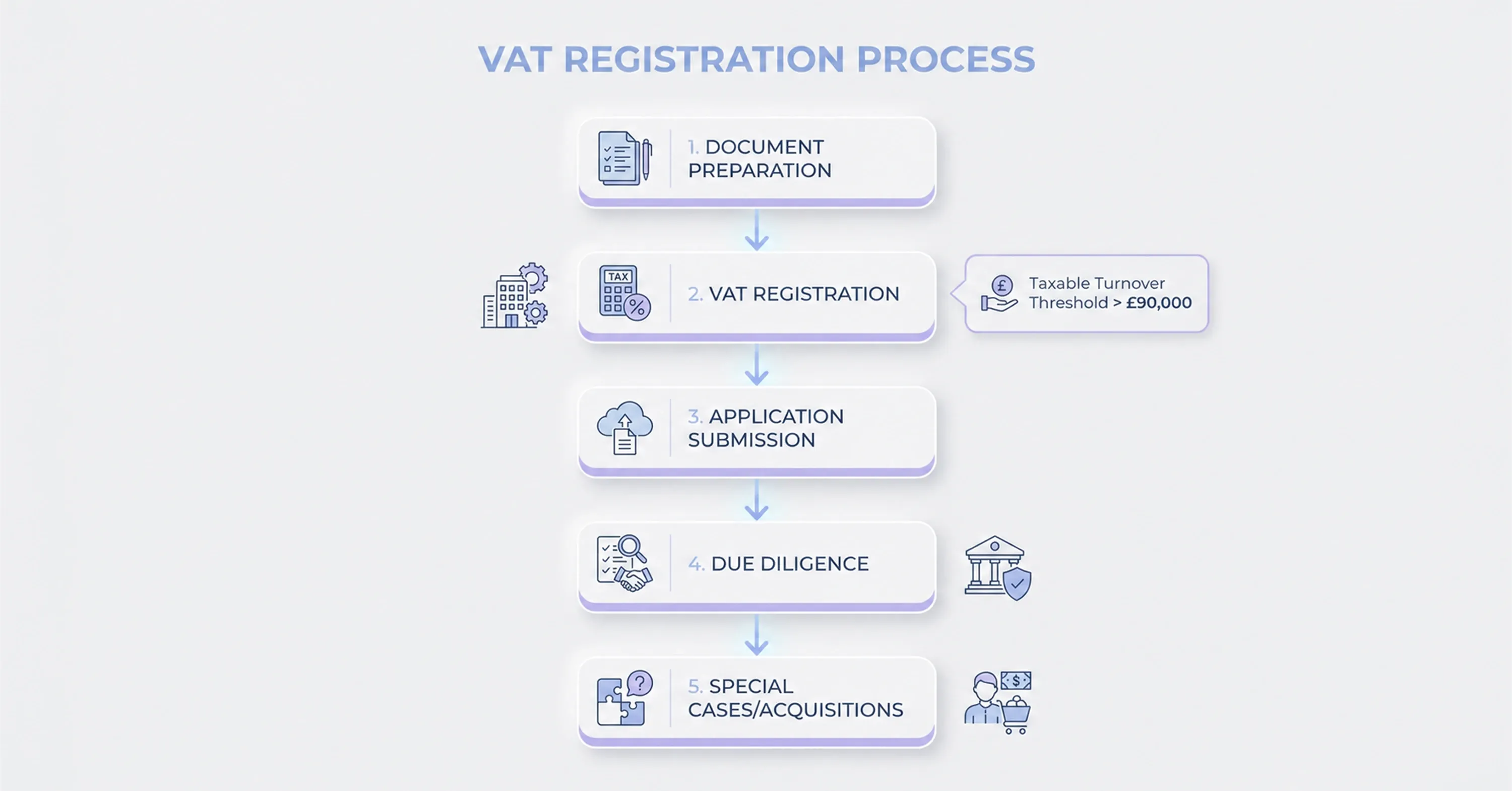
This article walks you through the entire company VAT registration process, from understanding who needs to register and when, to completing the application and staying compliant afterward. You'll learn about mandatory and voluntary registration, the documents you'll need, how the online process works, and what ongoing obligations come with holding a business VAT number. By the end, you'll have a clear, step-by-step path to getting registered without the usual confusion.
Understanding VAT Registration and Why It Matters
Before jumping into the steps, it helps to understand what VAT registration actually means for your business. A VAT identification number is essentially your company's tax identity for transactions involving value-added tax. Within the EU, it's a unique identifier assigned to businesses or non-taxable legal entities registered for VAT. In the UK, the system works similarly but under HMRC's oversight.
Why does this matter? Once registered, you charge VAT on your sales, reclaim VAT on eligible purchases, and file regular returns with the tax authority. It's not just a legal box to tick. For many businesses, especially those selling across borders, holding a valid VAT number signals legitimacy to partners and customers alike.
Company tax registration for VAT also opens the door to reclaiming input tax. If you're spending heavily on supplies, equipment, or services, that reclaimed VAT can make a real difference to your cash flow.
For organizations seeking a comprehensive overview, the VAT Business Registration: Step-by-Step Guide for Companies offers a clear layout of why VAT registration is essential and how it impacts scaling businesses.
Determine Whether You Must Register
The first thing to figure out is whether registration is mandatory or optional for your business. The answer depends on your taxable turnover and where you operate.
In the UK, businesses must register for VAT if their taxable turnover exceeds £90,000 in the last 12 months or is expected to exceed this threshold in the next 30 days. This is a rolling calculation, not tied to your financial year. You need to check it regularly.
Here's what counts toward the threshold:
-
All sales of goods and services that aren't VAT-exempt
-
Goods imported from abroad (in certain scenarios)
-
Certain supplies made to yourself, like business assets used personally
You can also reference the How to Register for VAT: Step-by-Step Guide for Businesses for a five-point checklist to confirm your registration requirement.
What If You're Below the Threshold?
Even if your turnover sits below £90,000, you can still choose to register for VAT voluntarily. This is worth considering if most of your customers are VAT-registered businesses themselves, since they can reclaim the VAT you charge, and you benefit from reclaiming VAT on your own costs.
For example, a small consultancy billing £60,000 annually to corporate clients might register voluntarily. The clients don't mind the VAT charge because they reclaim it, and the consultancy recovers VAT on office rent, software subscriptions, and travel expenses.
If you want practical examples and advice on when voluntary registration makes strategic sense, see the VAT Tax Registration: Complete Step-by-Step Guide.

Temporary Threshold Breaches
Sometimes revenue spikes temporarily, perhaps due to a one-off project or seasonal surge. If your taxable turnover exceeds the VAT threshold only temporarily, you can apply to HMRC for a registration exception. You'll need to demonstrate that your turnover will drop back below the threshold. HMRC reviews these on a case-by-case basis, so have your figures ready.
Knowing exactly where you stand prevents unnecessary registration or, worse, a late registration penalty. With your eligibility clear, it's time to gather what you need for the application.
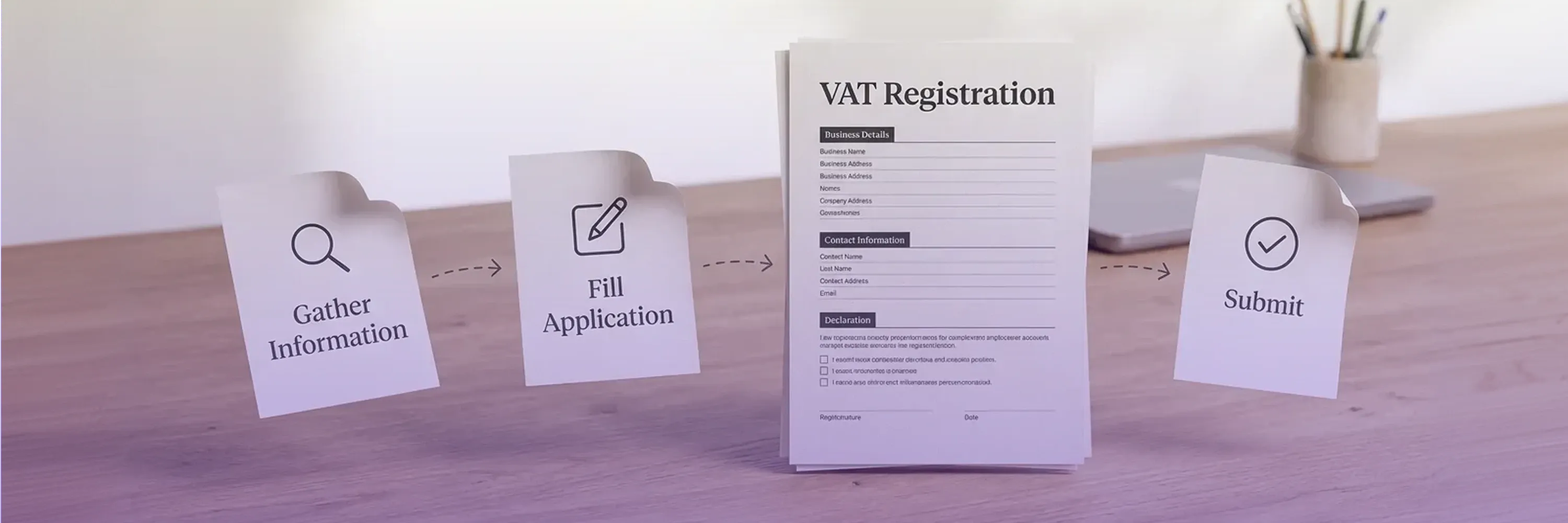
Prepare Your Documents and Information

A smooth registration depends on having the right details at hand before you start the application. Missing information means delays, and tax authorities aren't known for their patience.
You'll typically need:
-
Your business legal name and trading name (if different)
-
Company registration number (for limited companies)
-
Business bank account details
-
Estimated taxable turnover for the next 12 months
-
Details of your business activities and the goods or services you sell
-
Your principal business address
-
Information about any associated businesses
The Online VAT Registration: Step-by-Step Guide for Businesses provides a practical checklist of the required items and how to avoid common errors when preparing your application.
Special Cases: Takeovers and Group Registrations
If your business has acquired or taken over another company, the rules shift. When a business takes over a VAT-registered company, it must register for VAT if the combined taxable turnover exceeds the threshold. This catches many buyers off guard, so if you're involved in an acquisition, factor VAT registration into your due diligence.
With everything assembled, you're ready to submit your application, which brings us to the actual registration process.
Complete the Registration Process
The mechanics of registering are more straightforward than most people expect. In the UK, businesses can register for VAT online, and upon registration, they receive a 9-digit VAT registration number. This number becomes your official identifier for all VAT-related transactions and filings.
For an illustrated walkthrough of the online process and typical timelines, review the Online VAT Registration: Step-by-Step Guide for Businesses.
Here's the typical online process:
-
Create a Government Gateway account (if you don't already have one)
-
Navigate to the VAT registration service
-
Enter your business details, turnover figures, and bank information
-
Submit the application and wait for confirmation
HMRC usually processes applications within a few weeks, though it can take longer during busy periods. You'll receive your VAT registration certificate by post, which includes your business VAT number and the date from which you must start charging VAT.
Can Someone Else Handle This for You?
Yes. Businesses in the UK can appoint an agent to handle VAT returns and communications with HMRC on their behalf. This is especially useful if you're managing multiple country registrations or simply prefer expert hands on the process.
For marketplace sellers operating across borders, the complexity multiplies quickly. Each country has its own thresholds, forms, and filing schedules. For insights on managing VAT in several countries, see Who Handles Multi-Country VAT Registration and Reporting?. This is where working with a dedicated compliance partner like 1stopVAT makes a real difference. Their team of 40+ certified tax specialists handles VAT registration and filings across 100+ countries through a single point of contact, removing the guesswork from cross-border compliance.
Once you've submitted your application and received your VAT number, the next phase is about staying compliant.
Stay Compliant After Registration
Getting your business VAT number is just the beginning. What follows is an ongoing set of obligations that, if ignored, can lead to fines and audits.
Your core responsibilities include:
-
Charging the correct rate of VAT on taxable sales
-
Issuing VAT-compliant invoices
-
Filing VAT returns on time (usually quarterly in the UK)
-
Keeping accurate VAT records for at least six years
-
Paying any VAT owed by the deadline
To build a robust compliance routine after registration, consult these best practices for VAT Reporting Made Simple: Best Practices for Businesses.
Keep Your Details Up to Date
Businesses change. You might move offices, rebrand, or restructure. Whatever the case, you must inform HMRC within 30 days of any changes to your VAT registration details, such as business name or address. Failing to update your details can create mismatches in tax records that trigger compliance reviews.
A practical example: a retailer that moves its warehouse to a new city but doesn't update its VAT registration address could face complications when HMRC cross-references shipping data with registered details. A quick update avoids that headache entirely.
Verify VAT Numbers When Trading
If you're doing business with companies in the EU, it's wise to verify their VAT numbers before completing transactions, especially for zero-rated intra-community supplies. To streamline this process, see VAT No Lookup: How to Verify VAT Numbers Quickly. This takes seconds and protects you from charging the wrong VAT rate or dealing with fraudulent entities.
Staying on top of these requirements is what separates businesses that handle VAT smoothly from those that scramble at filing time. For sellers managing obligations in multiple jurisdictions, 1stopVAT's compliance and filing services take this burden off your plate, combining human expertise with structured processes so nothing slips through the cracks.
What Is VAT Registration?
VAT registration is the process by which a business enrolls with the relevant tax authority to collect value-added tax on taxable sales, reclaim VAT on eligible purchases, and file periodic VAT returns. In the UK, registration is mandatory when taxable turnover exceeds £90,000 and results in the assignment of a unique 9-digit VAT number that identifies the business for all VAT purposes.
Conclusion
Registering your company for VAT doesn't have to be complicated if you approach it methodically. Start by checking whether you've hit the mandatory threshold or whether voluntary registration makes financial sense. Gather your documents, complete the online application, and then stay on top of your filing and record-keeping obligations. The process is largely the same whether you're a solo trader or a growing e-commerce brand, though cross-border sellers face additional layers that benefit from specialist support. The key is to treat company tax registration not as a one-time task but as the foundation of an ongoing compliance routine that keeps your business VAT number valid and your operations running cleanly.