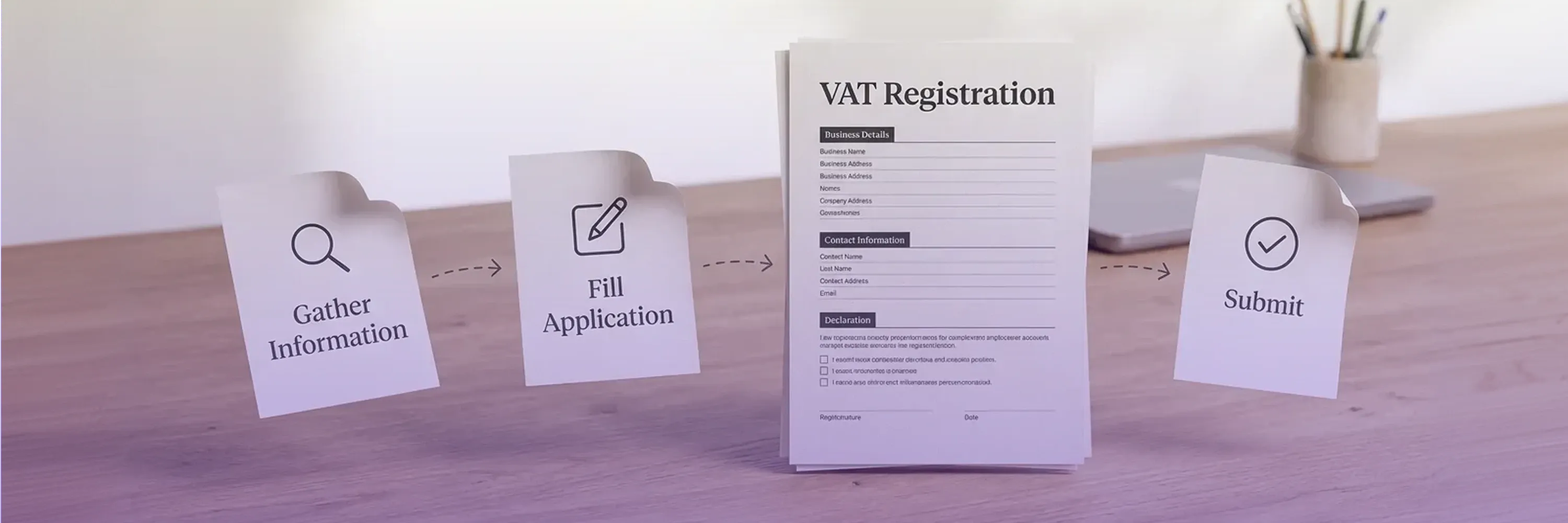
A realistic photo of tax planning and accounting work showing a person calculating finances with a notebook and calculator, overlaid with digital tax, compliance, and financial growth icons

Top Experts to Explain VAT Numbers and Compliance

VAT identification can feel like alphabet soup until someone knowledgeable lays out the rules in plain English. That is exactly what the people on this list do every day. They demystify VAT numbers, explain cross-border filing requirements, and help businesses avoid expensive penalties.

Below is a practical guide that starts with the basics of a VAT number, then walks you through the seven most respected experts and advisory bodies you can turn to for reliable answers.

Content authorBy Beata ČepėPublished onReading time8 min read

Why a VAT number matters before you ship a single parcel

Your VAT number is the passport that allows your business to trade legally across borders. It proves to tax authorities that you are registered, tracks how much VAT you collect, and determines if you can reclaim input tax. Because the European Union alone raises over €1 000 billion in VAT every year and still loses €89 billion to non-compliance in a single year, authorities scrutinise every registration. A wrong or missing VAT ID triggers late-filing fines, denial of zero-rating on exports, or even criminal fraud investigations.

In short, having the right number, registered in the right country, and validated on every invoice is the first line of defence against gaps, audits, and reputational damage.

What you will learn in this guide

  • A plain-language definition of a VAT number and how it is issued

  • Seven credible sources who can explain tricky registration, filing, and audit questions

  • Step-by-step examples of how to verify any EU VAT number in seconds

  • Quick answers to the questions readers ask most in the FAQ section

By the end, you will know exactly where to look for authoritative guidance and how to keep your own VAT IDs squeaky-clean.

1. European Commission DG Taxation and Customs Union

The European Commission’s DG TAXUD writes the rules that every EU tax authority follows, so their guidance sits at the top of any VAT research list.

  • Publications such as the annual “VAT Gap in the EU” report quantify risk: the 2025 edition pegs the shortfall at €128 billion, 9.5% of the theoretical liability.

  • The VAT directives, explanatory notes, and e-commerce guides available on the TAXUD portal break down complex concepts like the One-Stop Shop (OSS) schemes into simple flowcharts.

  • Free online tools: the VIES system lets anyone verify an EU VAT number instantly, while the “Taxes in Europe” database shows local registration thresholds.

Real-world example: A German marketplace seller discovered through VIES that its Spanish buyer’s VAT ID had been de-registered two months earlier. Because the seller caught the error before invoicing, it applied the correct German VAT rate and avoided underpaying Spanish tax.

To go deeper on how to run a compliant EU VAT number check and keep a bulletproof audit trail, see How to Perform an EU VAT ID Check (VIES Guide).

These resources make DG TAXUD the first stop for legislative text, statistical context, and official explanations.

2. National Tax Authorities (HMRC, BZSt, ATO, etc.)

After the EU publishes an overarching directive, each country transposes it into national law. That is why local tax portals remain essential.

  • HM Revenue & Customs (HMRC) publishes VAT Notice 700 and detailed sector notices. The latest annual statistics show £171 billion in VAT receipts for FY 2024/25.

  • Germany’s Bundeszentralamt für Steuern (BZSt) issues individual letter rulings (Umsatzsteueranwendungserlass) that clarify edge cases like chain transactions.

  • Australia’s Taxation Office maintains an ABN Lookup that confirms both GST and VAT-style registrations.

Quick tip: Most portals allow bulk validation uploads, saving hours when onboarding hundreds of new suppliers.

If you need practical step-by-step checklists and insight into US/EU thresholds, VAT services for US companies: How to Stay Compliant When Selling Internationally is a go-to operational resource.

Because audits and penalties are enforced at the national level, these authorities supply the last word on practical compliance.

3. OECD Consumption Tax Unit

A clean infographic illustrating the relationship between law, academia, and knowledge using icons for justice scales, ideas, and legal documents on a modern pastel background

Outside the EU, the OECD sets global benchmarks. Their biennial “Consumption Tax Trends” report measures efficiency with the VAT Revenue Ratio (VRR). For 2022 the average VRR clocked in at 0.58, meaning roughly 42 % of potential VAT stayed uncollected.

Why consult the OECD?

  • Cross-country comparisons help CFOs model exposure when expanding into new markets.

  • Detailed annexes explain different registration formats: for instance, New Zealand’s “NZBN” varies from Canada’s Business Number even though both are GST regimes.

  • Policy papers outline best ways to close collection gaps, offering forecasting insights to businesses.

The result is a macro view that complements the EU’s micro-level rules.

4. VAT-Specialised Law Firms and Academics

When guidance conflicts, a peer-reviewed legal analysis can settle the matter.

  • Professor Rita de la Feria (University of Leeds) frequently publishes on fraud and the concept of abuse.

  • WTS Global and Big Four VAT teams produce country guides that dissect nuanced topics like place-of-supply in digital services.

  • Journals such as “International VAT Monitor” blend academic rigour with real-world impact studies.

Case in point: A 2024 academic article on carousel fraud quantified that EU states still lose €13–33 billion annually to MTIC schemes and suggested invoice-level blockchain tagging to reduce the gap. The research gave fintech marketplaces evidence to lobby for simplified reporting thresholds.

If your business relies on practical, end-to-end compliance expertise rather than purely academic advice, VAT Compliance & Consultancy: Why Expert Advice Matters offers a comprehensive perspective on navigating local laws, automation, and advisory services.

Because these experts combine academic neutrality with courtroom tested opinions, they help businesses navigate grey areas confidently.

5. 1stopVAT – Single Point of Contact for Global Registrations

Even experienced finance teams struggle to juggle multiple tax offices, languages, and e-filing portals. 1stopVAT, staffed by more than 40 certified specialists, solves that pain by handling VAT registration, periodic filings, and advisory work in over 100 jurisdictions.

  • Integrated dashboard shows all active VAT IDs, next filing deadlines, and real-time validation checks.

  • Consulting arm answers technical questions, from OSS eligibility to input credit recovery.

  • Automation plus human review ensures filings reflect each country’s local quirks.

For fast-growing e-commerce brands, having one expert contact cuts through the administrative clutter and frees up bandwidth for sales. You can get a broader market overview and compare top options in the Best VAT Registration Services in 2025: Top Providers Reviewed guide.

6. Trade and Industry Associations

Sector-specific bodies translate general rules into day-to-day business language.

  • Ecommerce Europe offers OSS implementation webinars and has mapped all national distance-selling thresholds.

  • The European Chemicals Agency (ECHA) publishes VAT treatment guides for REACH compliance invoices.

  • TechUK collaborates with HMRC to pilot simplified VAT accounting for software subscription exports.

For more on the value of cross-border specialists, see why Multi-country VAT advisors: Why Your Business Needs One can make or break compliance for international businesses.

Such associations combine lobbying power with practical templates, helping members stay compliant while influencing future reforms.

7. Independent VAT Bloggers and Podcasters

Finally, some of the clearest explanations come from practitioners who post weekly. Their niche commentary can be the quickest way to learn about a new rule change.

  • “VAT Whisperer” (blog) summarises UK tribunal decisions in 300-word posts.

  • “Indirect Tax Chat” (podcast) interviews auditors and investigators about current fraud patterns.

  • LinkedIn newsletters by in-house VAT managers often share checklists that have already been signed off by internal audit.

Always cross-check informal advice against official sources, but these channels excel at translating dense legalese into accessible checklists within hours of an announcement.

Choosing the Right VAT Expert: What Really Matters

Between supranational bodies, national agencies, and private consultants, reliable VAT expertise is only a click or phone call away. The trick is matching your question to the right expert level, then documenting every clarification in case an auditor asks for proof.

How to verify a VAT number in three quick steps

Correct VAT IDs prevent lost input credits and penalties. Here is the fastest workflow:

  1. Identify the country code prefix: “DE” for Germany, “FR” for France, etc.

  2. Enter the full number in the EU’s VIES portal or the national lookup tool.

  3. Export or screenshot the confirmation and attach it to the invoice for your audit trail.

If VIES returns an error, contact the customer, not the tax office, because the trader must resolve registration lapses.

For a detailed, screenshot-driven walkthrough that covers not only VIES but also backup national portals and batch validation, consult How to Verify a VAT Number: A Simple Guide.

A Dutch wholesaler recently discovered a customer typo during step two, corrected it the same day, and saved 19% VAT on a €50 000 shipment.

What is a VAT number?

A VAT number is a unique identifier issued by a tax authority that allows a business to charge, collect, report, and reclaim value added tax on taxable transactions. It typically contains a country prefix (e.g., “IT” for Italy) followed by 8–12 alphanumeric characters and must appear on invoices, customs declarations, and periodic VAT returns.

Conclusion

VAT compliance begins with a correct, verifiable VAT number and ends with accurate, on-time reporting. When questions arise, turn first to the European Commission for overarching rules, then consult national tax authorities for local specifics. Layer that with insights from the OECD, legal scholars, sector associations, and expert service providers like 1stopVAT, and you have a 360-degree support network. By leveraging the expertise in guides like Best Cross-Border Tax Compliance Firms: Global VAT Experts, you can trade confidently, stay off the penalty radar, and focus on growth.


You generally need a VAT number once your taxable turnover exceeds the registration threshold set by the country where you are established or when you begin selling goods or digital services across EU borders. Always check the local threshold because it can differ widely.

Yes, a company may require separate VAT IDs in different countries if it holds local inventory, operates an overseas branch, or exceeds distance-selling thresholds under OSS. Keeping a ledger that matches each transaction to the correct number avoids misreporting.

No. A VAT number is specific to value added tax. Your company may also have a corporate income tax number or employer registration. Mixing them up on invoices can delay refunds or trigger audits.

Tax authorities can deny zero-rating, reclaim wrongly deducted input VAT, impose late payment interest, and levy fines. Always validate the number before issuing a tax invoice or dispatching goods.

The European Commission’s “Taxes in Europe” database and most national tax portals list standard and reduced rates. Many advisory firms also maintain up-to-date charts, but double-check any rate you find against official tables before invoicing.

Simple Compliance

Free consultation with 1StopVAT experts

You Might Also Like

Discover more insights and articles

A clean flat-lay image showing tax analysis documents, a calculator, and a tablet displaying financial charts, representing modern tax planning and financial reporting

Handling VAT for Digital Services: A Practical Guide

Selling digital products offers an incredible opportunity to scale a business globally without the logistics of shipping physical goods. However, once you cross borders, tax obligations follow you. Learninghow to handle VAT for digital servicesis no longer just a task for large corporations; it is a fundamental requirement for any creator, developer, or SaaS company selling internationally.

The rules for taxing electronic services differ significantly from physical goods, often shifting the tax liability from the seller's location to the customer's location. This guide provides a clear pathway through the regulations, helping you identify your obligations, register correctly, and manage ongoing compliance without disrupting your operations.

A professional workspace showing hands calculating taxes with a calculator, laptop, notebook, and printed tax documents, illustrating business tax planning and financial analysis

Steps to register for sales tax in the US

Every business that ships products or provides taxable services across state lines eventually hits the same wall: you must collect and remit sales tax or risk fines and retroactive assessments. The rules vary by state, but the registration sequence follows a recognizable pattern. This guide walks you through that sequence, flagging the biggest pitfalls and shortcuts, so you spend less time wrestling with bureaucracy and more time selling.

Running a company already devours time. U.S. taxpayers as a whole will spend**7.9 billion hours and $546 billion in compliance costs**this year. Following the steps below will keep your share of those hours from spiraling.

Business professional analyzing tax compliance and financial obligations through a magnifying glass with digital tax and accounting icons

Leading Advisors on EU Invoicing Rules: Stay Compliant

Businesses selling in Europe cannot afford invoicing errors. One missing field or late transmission can trigger penalties, audits, or even shipment holds at the border. That pressure explains why so many companies now turn to leading advisors on EU invoicing rules to interpret fast-moving legislation and design frictionless processes.

EU rules evolve quickly and differ country by country. This article explains what the directives actually demand, shows how advisors reduce risk, ranks the most trusted firms, illustrates typical mistakes, and ends with a hands-on checklist your finance team can start using today.

Business executives shaking hands during a corporate meeting, symbolizing partnership, trust, and business growth strategy

What is a VAT number and how to verify it

A mistyped VAT number looks like a small error but it can freeze cross-border shipments, delay refunds, and trigger tax audits. Understanding what a VAT number is, how it is structured, and how to verify it keeps sales flowing and penalties at bay.

A single narrative runs through this guide: by the time you reach the last paragraph, you will know exactly why VAT numbers matter, what they look like in different countries, and the fastest ways to confirm that any number you receive is valid.