What You Will Learn
In the next few minutes you will:
-
Understand why timely GST registration matters, backed by fresh global statistics
-
Compare online and offline registration routes
-
See the complete seven-step process most companies follow
-
Review the eight best GST registration services for companies, including strengths and pricing hints
-
Get a quick-fire checklist and answers to common questions
By the end, you will know exactly which service fits your business and how to move forward with confidence.
The Rising Stakes of GST Compliance
Governments are tightening compliance because GST and VAT are huge revenue sources. The Australian Taxation Office reports 3.4 million businesses were on its GST books as of 30 June 2024, a slight annual rise. In the United Kingdom, the live VAT trader population still tops 2.28 million despite 234,000 new and 218,000 de-registrations in 2024. India’s tax authority collected a record ₹1.87 lakh crore of GST in April 2023 alone.
Higher revenues bring tougher enforcement. Missing the registration deadline can trigger back-tax, late-fee, and interest bills that dwarf the cost of hiring a specialist. That is why the first decision every finance team should make is whether to go it alone or use a professional service.
Online vs Offline Registration: What Changes for Companies?
Many jurisdictions let you file completely online, yet physical paperwork still pops up:
-
Some authorities need original signed copies after electronic submission
-
Scanned incorporation papers may require notary attestation
-
Multi-state operations might trigger separate state GST numbers, each with its own portal
An experienced provider bridges the gap. They know when an e-signature suffices, when a director must appear, and which documents need pre-verification. For cross-border sellers, a one-stop firm such as 1stopVAT can even handle VAT or GST numbers in 100 plus countries, keeping everything under a single point of contact.
To understand the registration nuances for digital businesses, you can review the Singapore – GST Registration for Overseas Vendors, which details requirements for non-resident sellers.
Bottom line: online portals speed things up, but the manual pieces still matter, and that is where a specialised service shines.
The Seven-Step Company GST Registration Process
Before you review providers, it helps to grasp the standard workflow. Each service on our list follows roughly this order.
Needs analysis
-
Confirm taxable turnover and nexus
-
Check registration thresholds (the UK now starts at £90,000 turnover after April 2024)
Document gathering
- Certificate of incorporation, board resolution, bank proof
Portal account creation
- Multi-factor login set-up
Form preparation
- HS codes, supply locations, business activity codes
Validation and submission
- Digital signature or physical sign-off depending on jurisdiction
Tax office queries
- Rapid response to clarifications to avoid rejection
Receipt of GSTIN/VAT ID and registration certificate
For a comprehensive reference on each application section, see How to Register for GST: A Step-by-Step Guide, which breaks down business details, director information, account creation, and portal use.
Real-world example
A SaaS start-up in Sydney hit the A$75 000 threshold in month eight. Its provider uploaded bank statements and draft invoices within 24 hours, replied to an ATO query the next morning, and secured the GST number in three days. The smoother the service, the fewer surprises your finance team faces during these seven steps.
Company GST registration checklist
Most providers will request the following within the first call:
-
Certificate of incorporation and Articles
-
Directors’ IDs and proof of address
-
Bank statement or cancelled cheque in company name
-
Primary place of business proof (utility bill or lease)
-
Detailed business activity description and expected turnover
For additional practical insights on VAT/GST document preparation and best practices, explore the advice in How to Register for VAT: A Complete Guide.
Keep these in one digital folder to shave days off the timeline.
The 8 Best GST Registration Services for Companies
Below are the leading players based on service scope, turnaround time, and customer feedback. Prices fluctuate by jurisdiction, so treat the figures as indicative.
TaxAssist Corporate
-
Specialises in small and medium companies in Australia and New Zealand
-
Typical turnaround: 3–5 business days
-
Bundles GST registration with quarterly BAS filing
1stopVAT
-
Handles GST, VAT, and sales tax in 100 plus countries through 40 tax specialists
-
Ideal for e-commerce brands expanding beyond one market
-
Offers ongoing compliance and filing, reducing vendor management clutter
For a granular comparison of leading global registration platforms - including country coverage, pricing hints, and tech features - see the analysis in Best VAT Registration Services in 2025: Top Providers Reviewed.
ClearTax Business
Taxback Global
CorpSeed Professionals
TMF Group
OnlineFilings UK
-
All-digital process, integrates with Companies House data
-
24-hour express VAT registration option at premium fee
MyGSTGuide
-
Education-first approach, supplies short video tutorials with every package
-
Helpful for founders who want to learn while outsourcing
Each of these firms follows the seven steps outlined earlier. The difference lies in industry focus, human support, and add-on services like monthly return filing.
Why Paying for Professional Help Pays Off
-
Error reduction: A typo in your business activity code can delay approval by weeks
-
Time saved: Finance teams focus on cash flow and payroll instead of chasing clarifications
-
Multi-jurisdiction clarity: The European Commission notes that Member States lost €89.3 billion of VAT in 2022 because of compliance gaps, proof that rules remain complex.
-
Future-proofing: Hungary’s finance minister calls the new EU “VAT in the Digital Age” rules “a cornerstone for the digital transition,” hinting at rising digital filing duties (Council of the EU)
For a comprehensive guide to common GST compliance challenges - including invoice mistakes, cross-border digital sales, and data errors - see Goods and Services Tax (GST) Explained: A Complete Guide.
In short, a modest upfront fee prevents costly firefighting later.
Choosing the Right Partner: A Quick Evaluation Checklist
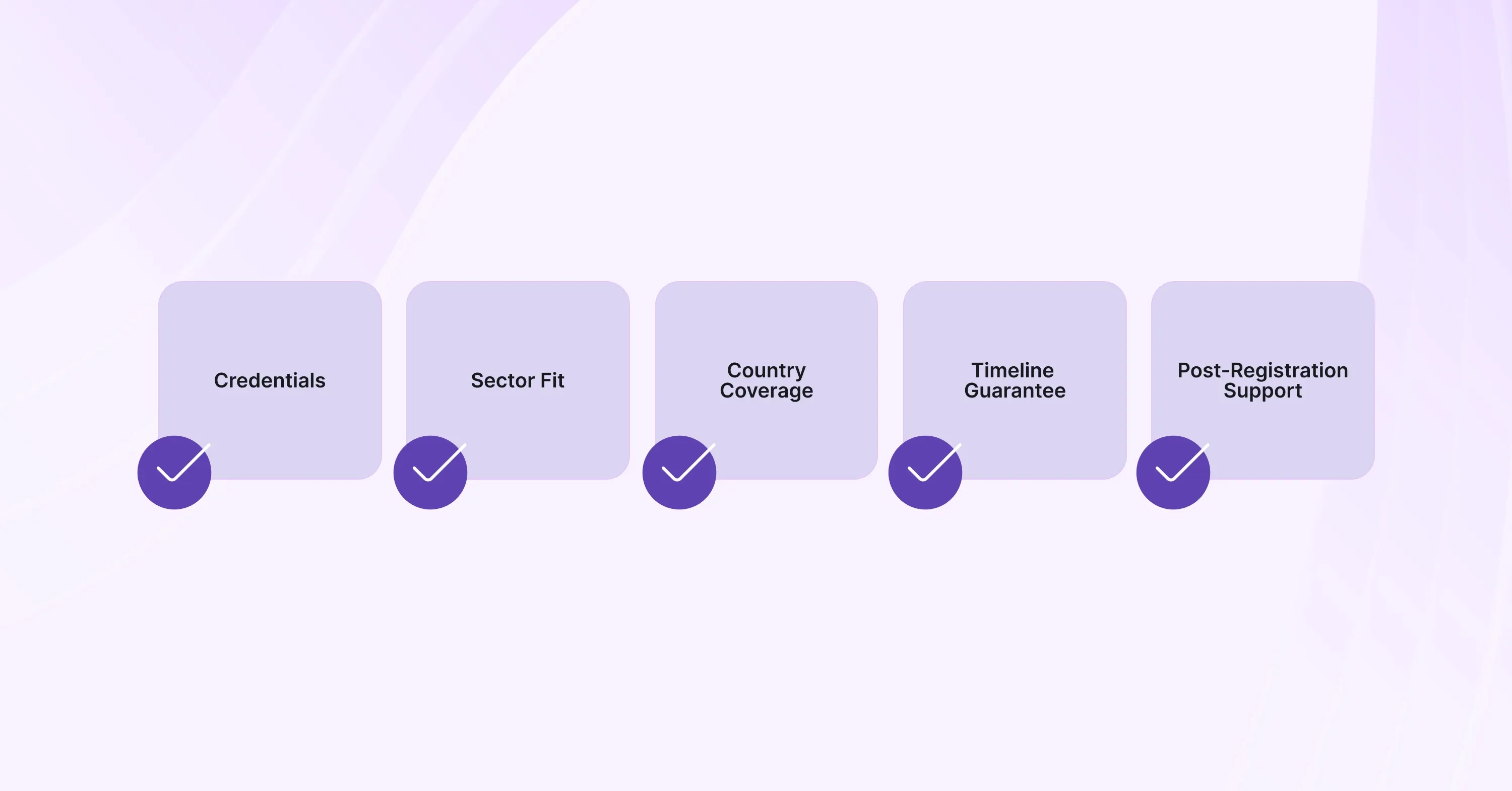
Before you sign an engagement letter, run through these points.
Credentials
- Are advisers certified tax agents or chartered accountants?
Sector fit
- Does the firm understand your industry’s exemptions or reduced rates?
Country coverage
- One provider for all markets, or multiple niche firms?
Timeline guarantee
- Do they offer refunds or discounts if they miss filing dates?
Post-registration support
- Can they file monthly or quarterly returns, handle amendments, and manage audits?
Ask for two client references and a sample engagement letter. This ten-minute step reveals how the firm will treat your account after the invoice is paid.
Conclusion
Fast, error-free GST registration keeps cash flowing and tax officers happy. Whether you pick a global outfit like 1stopVAT or a local specialist, make sure the service covers the seven steps, answers queries quickly, and offers post-registration support. Armed with the statistics, process map, and provider list above, you can select the partner that turns compliance from a headache into a solved task.