A financial report with bar charts lies on a desk while two business professionals work on laptops in the background

Texas Sales Tax Compliance: Best Firms to Work With

Sales tax compliance in Texas is becoming increasingly strict as enforcement from the Texas Comptroller intensifies. Even minor filing errors can lead to audits, notices, or costly penalties. This guide explains how Texas sales tax compliance works, why working with specialized consultants makes sense, and which firms can help you stay compliant while focusing on growing your business.

Content authorBy Beata ČepėPublished onReading time8 min read

What You Will Learn

Texas businesses collected $3.94 billion in state sales tax revenue in June 2024, 0.4% more than prior year. That steady growth means more audits, notices, and penalties when filings wrong. Which Texas sales tax compliance firms can keep you on the right side of the Taxed Comptroller while letting you focus on selling? Below is a practical guide to state tax compliance in Texas, the value of hiring specialized consultants, a comparison of leading firms, and hands-on tips to stay compliant.

By the end of this read you will:

  • Understand the basic Texas sales tax rules that trip up new filers.

  • See why many companies turn to outside Texas tax consultants instead of tackling filings in-house.

  • Compare five well-regarded Texas sales tax compliance firms on expertise, pricing style, and client fit.

  • Walk away with an action checklist for bullet-proof state tax compliance Texas businesses can follow all year.

Texas Sales Tax Rules in a Nutshell

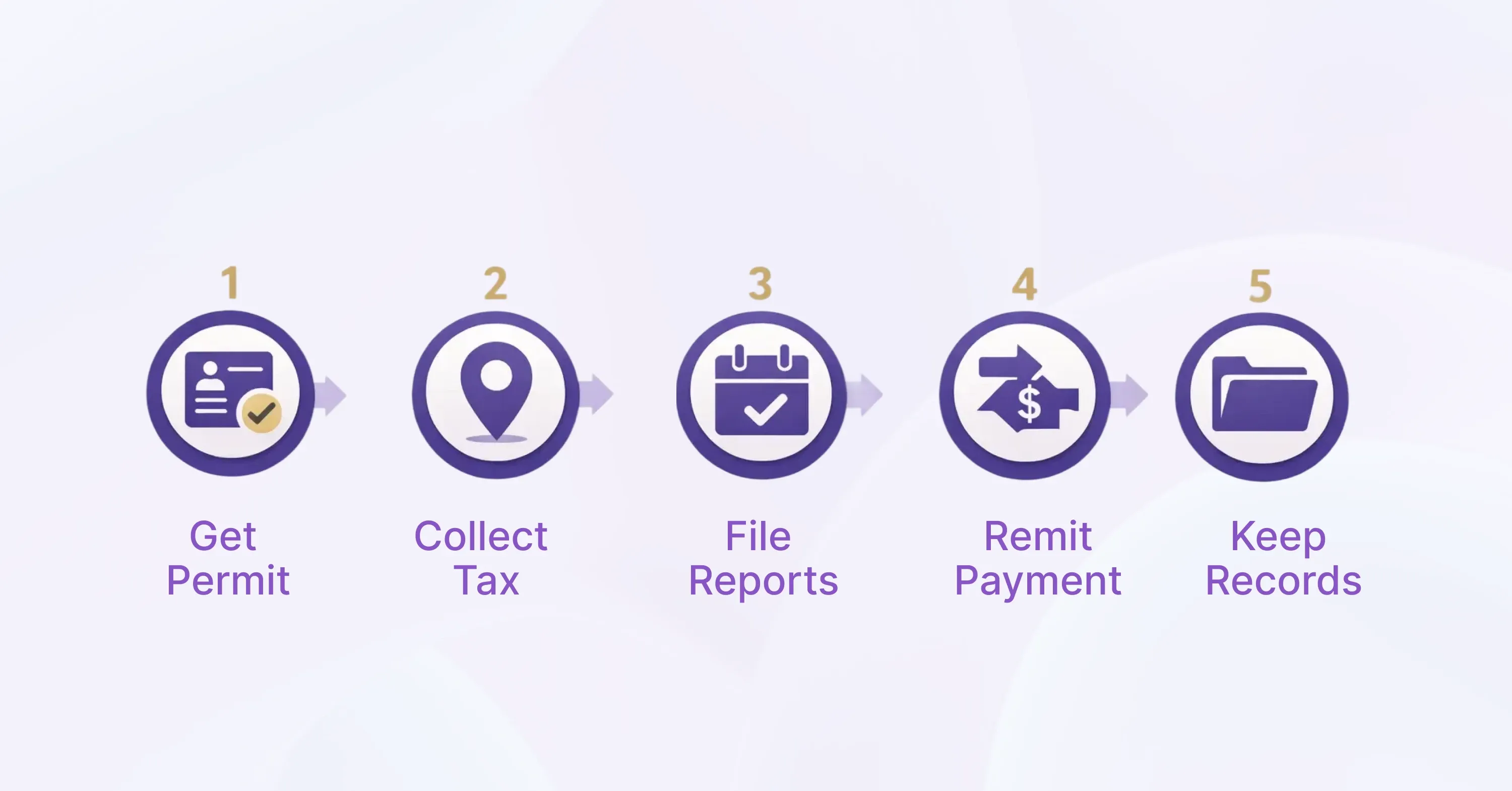
A five-step sales tax process is illustrated with icons representing getting a permit, collecting tax, filing reports, remitting payments, and keeping records

Every sale of tangible personal property in Texas is subject to a 6.25% state rate, and local cities, counties, and transit authorities can layer up to 2% more. That means a possible 8.25% combined rate on each invoice.

Key obligations businesses face:

  • Register with the Texas Comptroller before making taxable sales.

  • Collect the correct local rate based on the customer’s ship-to address, not the seller’s location.

  • File monthly, quarterly, or yearly returns depending on prior-year tax due.

  • Remit tax electronically by the 20th of the month following the close of the reporting period.

  • Keep exemption certificates on file for four years.

Why Accurate Sales Tax Rate Application Matters in Texas

A Houston wholesaler shipping to Austin must charge the Austin combined rate, even though its warehouse is in Harris County. Misapplying the rate risks penalties of up to 50% of the unreported tax.

In short, accuracy at the point of sale and timeliness on the back end rule the day. For a deeper dive into the patchwork of U.S. state rules and compliance tips, see US Sales Tax Explained: State-by-State Guide.

Why Hire Texas Sales Tax Compliance Firms?

Running tax internally looks cheap until the hidden costs add up. A recent study found that 21 large U.S. firms spent $537 million on income-tax compliance in 2022–2023, and $61 million of that was for state and local work. Time, software, and penalties compound quickly.

Working with specialized state tax consultants delivers:

  • Local expertise: Former Comptroller auditors know the audit manual by heart.

  • Technology plus humans: Spreadsheets are replaced with validated data flows, yet every return is reviewed by a credentialed preparer.

  • Defense ready: If the Comptroller issues a notice, your firm already has the backup.

  • Opportunity spotting: Consultants frequently identify tax-saving exemptions on manufacturing, R&D, or agriculture that owners miss.

For high-volume e-commerce sellers, a compliance partner often pays for itself within one avoided penalty cycle. For an overview of the practical advantages of outsourcing - and a cost comparison with in-house teams - check out Tax Consultation: Why Businesses Need Professional Guidance.

Comparing the Best Texas Sales Tax Compliance Firms

Choosing the right partner starts with clear criteria. We evaluated five respected providers across experience, scope, support model, and pricing transparency. If you want a broad industry-wide perspective on leading providers, automation, and tech integration, see Top Sales Tax Compliance Firms for Businesses.

1. Ryan LLC

Ryan is a Dallas-headquartered powerhouse with 18 Texas offices.

  • Strengths

    • Deep bench of former state auditors specializing in sales and use tax.

    • Contingency-fee refund reviews can turn compliance into a cash win.

    • National footprint helps multistate sellers.

  • Watch for

    • Enterprise orientation; minimum fees can exceed smaller budgets.

    • Project work sometimes siloed from ongoing compliance teams.

Ideal for Fortune 1000 and private-equity backed companies needing strategic recovery plus filing.

2. Peisner Johnson

Founded in Plano, Peisner Johnson focuses solely on state and local tax.

  • Strengths

    • Laser focus on nexus studies, registrations, and filings.

    • “No surprises” flat-fee compliance packages keep budgeting simple.

    • Training webinars for client staff.

  • Watch for

    • Limited cross-border VAT coverage if you also sell overseas.

    • Dedicated account manager may span several hundred clients.

Great fit for mid-market e-commerce brands crossing the economic nexus threshold.

3. Weaver

Weaver is the largest Texas-based CPA firm not tied to a national network.

  • Strengths

    • Combines audit defense, sales tax, property tax, and income tax under one roof.

    • Strong relationships with local jurisdictions across the state.

    • SOC-compliant processes for data security.

  • Watch for

    • Hourly billing can escalate on messy data projects.

    • Less automation for marketplace sellers needing API integrations.

Best for Texas manufacturers or energy companies that value a traditional CPA approach.

4. Indigo Spire

Indigo Spire is a boutique consultancy led by ex-Comptroller auditors.

  • Strengths

    • Hands-on team handles everything from permit application to amended returns.

    • Audit defense packages include on-site representation.

    • Responsive communication - the founders answer the phone.

  • Watch for

    • Limited capacity; they take on a select number of clients each quarter.

    • No proprietary software, so data hand-offs rely on secure file exchange.

Perfect for smaller distributors who want white-glove service without enterprise pricing.

5. 1stopVAT

Although best known for cross-border VAT, 1stopVAT’s 40-plus certified specialists also guide U.S. clients through state sales tax hurdles when transactions span borders.

  • Strengths

    • Single point of contact coordinates both U.S. sales tax and foreign VAT.

    • Automated data extraction combined with human review reduces filing errors.

    • Coverage in 100 + countries supports fast-growing SaaS and e-commerce brands.

  • Watch for

    • Purely domestic retailers may not need the global toolkit.

    • Pricing advantages show strongest when multiple jurisdictions are involved.

A smart pick for companies expanding from Texas into Canada, the EU, or Mexico who want continuity across tax types.

For more information on criteria and additional firms, see Top Sales Tax Compliance Firms for Businesses.

Head-to-Head Snapshot

  • Enterprise depth: Ryan

  • Straightforward flat fees: Peisner Johnson

  • Full-service CPA environment: Weaver

  • Boutique attentiveness: Indigo Spire

  • Global reach: 1stopVAT

Best Texas Sales Tax Compliance Firms: Quick Summary

The best Texas sales tax compliance firms combine local Comptroller expertise, accurate rate calculation, timely electronic filings, and responsive audit defense. Companies frequently shortlist Ryan LLC, Peisner Johnson, Weaver, Indigo Spire, and 1stopVAT because each offers proven Texas sales tax knowledge, clear pricing structures, and support models that suit businesses from startups to multinationals.

How to Choose the Right Partner

Selecting a firm is easier when you map needs against offerings.

  • Make a compliance map: list all states, estimated monthly transactions, and resale vs. taxable mix.

  • Rank pain points: rate calculation, filing, notices, exemptions, audit defense.

  • Compare fee s3tyles: hourly, flat, or contingency on refunds.

  • Ask for sample workpapers: transparency in schedules and reconciliations is non-negotiable.

  • Verify credentials: look for former Comptroller staff or Texas CPA licenses.

Once you narrow the field, pilot a single state return before signing a multi-year deal. Taking these steps up front ensures the relationship delivers measurable value, not just another vendor invoice. For additional tips and an action checklist, consider the Sales Tax Compliance: Key Steps for Your Business guide.

Staying Compliant Between Filings

Firms can only work with the data you provide. Keep your internal house in order:

  • Close the books on time so sales totals tie to returns.

  • Reconcile marketplace and point-of-sale platforms monthly.

  • Archive exemption certificates digitally with searchable keywords.

  • Review nexus quarterly if remote employees, warehouses, or ad campaigns shift.

  • Monitor legislative changes: the Texas Legislature meets every two years and loves tax tweaks.

For example, after hiring two remote San Antonio employees, a California apparel brand realized it had created physical nexus in Texas. Partnering early with a consultant avoided late penalties on six months of missed filings. Routine, process-minded actions like these are covered in more depth in the US Sales Tax Explained: State-by-State Guide. Keeping these habits tight reduces rush fees and audit risks.

Conclusion

Texas sales tax compliance is more than uploading a spreadsheet to the Comptroller portal. With billions in revenue passing through the state each month and audit rates creeping up, the advantages of seasoned Texas tax consultants are clear. Ryan, Peisner Johnson, Weaver, Indigo Spire, and 1stopVAT stand out for distinct reasons, yet each brings the deep local knowledge and disciplined processes businesses need. Evaluate your pain points, match them to the right support model, and your next Texas sales tax deadline can arrive stress-free.

Texas is an origin- and destination-based hybrid. Sales shipped within Texas are taxed using the customer’s local rate, while over-the-counter sales use your store’s rate. Always verify the combined state (6.25%) plus local (up to 2%) rate for the delivery address.

Filing frequency depends on prior-year tax liability. New registrants usually file monthly. Once total annual tax drops below $10,000 you may file quarterly, and below $1,000 you can switch to yearly. Your compliance firm can request a frequency change once thresholds are met.

Yes. Electronically delivered software, e-books, and streaming services are taxable unless a specific exemption applies. If you sell SaaS nationwide, you will need to collect Texas tax from Texas customers even if you operate elsewhere.

Common triggers include late filings, significant refund claims, sudden drops in reported tax, or mismatch between 1099-K totals and sales tax returns. Consultants often spot and correct discrepancies before the state flags them.

Yes. Providers like 1stopVAT coordinate sales tax filings in Texas and manage VAT registrations abroad, creating one workflow for cross-border sellers.

Simple Compliance

Free consultation with 1StopVAT experts

You Might Also Like

Discover more insights and articles

A clean flat-lay image showing tax analysis documents, a calculator, and a tablet displaying financial charts, representing modern tax planning and financial reporting

Handling VAT for Digital Services: A Practical Guide

Selling digital products offers an incredible opportunity to scale a business globally without the logistics of shipping physical goods. However, once you cross borders, tax obligations follow you. Learninghow to handle VAT for digital servicesis no longer just a task for large corporations; it is a fundamental requirement for any creator, developer, or SaaS company selling internationally.

The rules for taxing electronic services differ significantly from physical goods, often shifting the tax liability from the seller's location to the customer's location. This guide provides a clear pathway through the regulations, helping you identify your obligations, register correctly, and manage ongoing compliance without disrupting your operations.

A professional workspace showing hands calculating taxes with a calculator, laptop, notebook, and printed tax documents, illustrating business tax planning and financial analysis

Steps to register for sales tax in the US

Every business that ships products or provides taxable services across state lines eventually hits the same wall: you must collect and remit sales tax or risk fines and retroactive assessments. The rules vary by state, but the registration sequence follows a recognizable pattern. This guide walks you through that sequence, flagging the biggest pitfalls and shortcuts, so you spend less time wrestling with bureaucracy and more time selling.

Running a company already devours time. U.S. taxpayers as a whole will spend**7.9 billion hours and $546 billion in compliance costs**this year. Following the steps below will keep your share of those hours from spiraling.

Business professional analyzing tax compliance and financial obligations through a magnifying glass with digital tax and accounting icons

Leading Advisors on EU Invoicing Rules: Stay Compliant

Businesses selling in Europe cannot afford invoicing errors. One missing field or late transmission can trigger penalties, audits, or even shipment holds at the border. That pressure explains why so many companies now turn to leading advisors on EU invoicing rules to interpret fast-moving legislation and design frictionless processes.

EU rules evolve quickly and differ country by country. This article explains what the directives actually demand, shows how advisors reduce risk, ranks the most trusted firms, illustrates typical mistakes, and ends with a hands-on checklist your finance team can start using today.

Business executives shaking hands during a corporate meeting, symbolizing partnership, trust, and business growth strategy

What is a VAT number and how to verify it

A mistyped VAT number looks like a small error but it can freeze cross-border shipments, delay refunds, and trigger tax audits. Understanding what a VAT number is, how it is structured, and how to verify it keeps sales flowing and penalties at bay.

A single narrative runs through this guide: by the time you reach the last paragraph, you will know exactly why VAT numbers matter, what they look like in different countries, and the fastest ways to confirm that any number you receive is valid.