

Major takeaways
Today, you will learn:
- The exact meaning of “tax consultation” and how it complements routine filing
- Tangible benefits of hiring tax advisory services instead of scrambling internally
- A step-by-step framework for selecting a trusted tax consultation firm
- Cost comparisons between outsourcing and an in-house department
- Extra considerations for non-domestic registration, EU VAT, and audits.
At the end, you’ll get a comprehensive checklist to turn taxes into a managed advantage. Tax consultation is an ongoing advisory relationship where qualified professionals analyze corporate activities, forecast liabilities, and design structures to mitigate tax exposure and align with legal compliance, with a focus on strategy, risk management, and future growth.
Consultation vs. routine filing: the critical difference
Most businesses equate “doing taxes” with submitting annual or quarterly forms. Key differences:
- Scope: Filing captures past transactions, consultation reviews, plans, expected revenue, and entity structure.
- Timing: Compliance is cyclical, consultation is continuous
- Deliverables: Returns and payments versus memos, scenario models, and risk assessments.
- Skill set: Data entry and statutory knowledge versus industry insight, negotiation with authorities, and strategic planning.
Why it matters:
- Some 10 million audits generated €105 billion in extra revenue in 2022, proof that mere form-filling is no shield when inspectors call.
- Businesses already spend an estimated 1.9% of turnover on compliance. Consultation keeps that cost from ballooning during disputes.
Benefits of professional tax advisory services
Engaging external experts is a hedge against cash-flow shocks and reputational damage.
- Risk reduction: Better interpretations, documentation, and early detection lower the chance of penalties.
- Cash savings: Optimized reliefs, credits, and group structures relieve working capital.
- Speed to market: Advisers proficient in import VAT, customs codes, and local registration rules shorten launch timelines.
- Resource focus: Finance teams regain bandwidth for forecasting and investor reporting.
- Credibility: Auditors and investors value an independent stamp on tax positions.
Europe offers a cautionary tale: €89.3 billion VAT gap in 2022 represented 7 % of expected revenues. Authorities are tightening digital reporting, meaning businesses without tailored tax advice are at risk of harsher fines and double taxation. Here are our in-depth insights into how expert advice can prevent these pitfalls
Spot check: Are you missing the value?
- Do you claim R&D credits in every eligible jurisdiction?
- Have you optimized supply chains for destination-based VAT?
- Is transfer pricing documented enough to withstand an audit?
- Do you run tax scenario models before entering new markets?
If you are unsure about whether to tick one of the answers, a tax consultation is your best bet
How to choose a tax consultation firm
The UK alone hosts 85,000 firms assisting 12 million taxpayers. A boutique firm that specializes in local business taxes might be a perfect fit for a small startup, but would be ill-equipped to handle the international tax complexities of a multinational corporation.
1. Match expertise to footprint
- Domestic only? Look for niche local specialists.
- Multiple EU countries? Prioritize pan-European teams with multilingual staff.
- Selling digital services worldwide? Seek advisers versed in OSS/IOSS and US sales tax.
Here’s our action-driven guide for SMEs evaluating cross-border tax and accounting solutions with practical considerations for system integration, expert selection, and global compliance. Before hiring a tax firm, verify its credentials and the corporate ethics of its professionals to ensure they have the necessary qualifications and a clean record.
2. Verify credentials and ethics
- Chartered status, bar admission, or similar professional body membership
- Up-to-date continuing education
- Transparent conflict-of-interest policy.
3. Assess technology stack
The efficiency and security of a tax firm are heavily dependent on its technology stack. A modern, well-integrated tech stack is no longer a luxury but a necessity for providing timely and accurate service.
Reputable tax consultation firms offer:
- Secure portals for document exchange
- Automated data pulls from your ERP
- Real-time dashboards of liabilities and refunds.
The effectiveness of any professional relationship hinges on clear and consistent communication. A tax firm’s communication style will much determine the quality of your customer experience.
4. Review communication style
- Clear plain-English explanations, not jargon
- Proactive alerts before deadlines
- Senior adviser access, not only junior staff.
5. Compare fee structures
An important step in selecting a tax firm is understanding and comparing its fee structures. While the ultimate cost will depend on the complexity of your situation, knowing the different billing models will help you find a firm that fits your budget.
- Hourly: flexible, but unpredictable
- Fixed-price project: certainty for defined scopes
- Retainer: useful for year-round advisory, typical for growing firms
Request sample engagement letters to gauge what is, and is not, included.
Outsourcing vs. building an in-house tax team
The global tax management market is expected to grow from $24.5 billion in 2025 to $33.2 billion by 2030. Much of that growth owes to the companies shifting compliance and consultation to third parties. Learn more about global advisory trends Cost comparison at a glance:
- In-house: salaries, employer taxes, software licenses, training, and possible turnover
- Outsourced: service fee, onboarding time, minor internal liaison costs
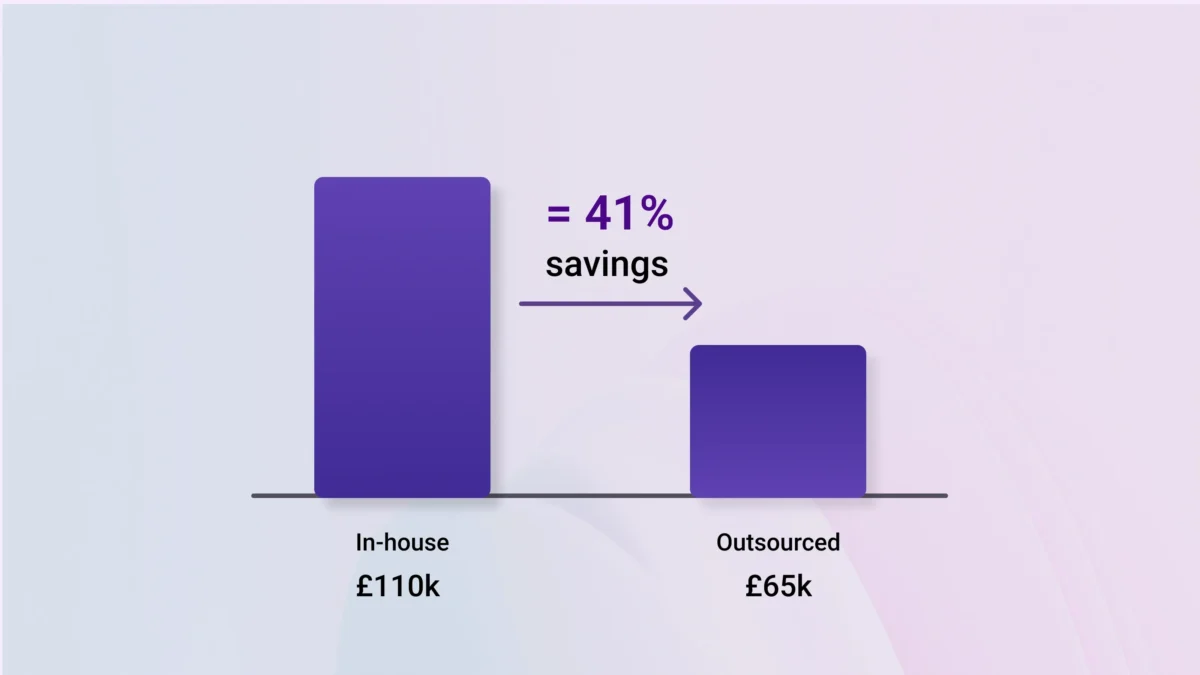
For a mid-size exporter:
- One senior tax manager’s salary: £90,000 plus benefits
- Compliance software: £15,000 annually
- Training and conferences: £5,000.
Total roughly £110,000 a year. An outsourced package covering returns, consultation sessions, and audit support might land at £65,000. Savings rise if you operate in more than three jurisdictions, because external advisers scale knowledge faster.
When in-house makes sense:
- Large transaction volumes that need instant sign-off
- Proprietary information that cannot leave the building
- A tax profile so complex that keeping both internal and external experts is prudent.
Often, a hybrid works best: a lean internal coordinator plus outsourced specialists.
Special focus: non-domestic registration and VAT filings
When coping with VAT, businesses that operate across borders must navigate a complex web of non-domestic registration and filing obligations.
Registration triggers:
- Distance sales thresholds in the EU OSS regime
- Physical stock held by fulfillment providers abroad
- Hiring remote employees who create a permanent establishment.
How to Stay Compliant When Selling Internationally: VAT services for US companies
Common VAT pitfalls:
- Incorrect use of zero-rating on exports
- Double taxation when goods return under warranty
- Failure to evidence intra-EU dispatch within the required time limits
Professional advisers map these issues early, reducing costly corrections.
Audit preparedness:
Tax authorities increasingly rely on data analytics. This means you should provide clean digital records, a full trail of invoices, and real-time tax position reports. A consultation tax partner sets file formats, retention rules, and mock audits to hold you ready for inspections.
Conclusion
Consultation tax provides more than simple compliance – it equips businesses with strategic insight, proactive risk management, and financial efficiency. Instead of reacting to audits or struggling with cross-border rules, companies that invest in professional guidance gain clarity, reduce costs, and accelerate growth. By partnering with the right advisers, consultation tax becomes a tool to safeguard compliance today and build a stronger competitive edge for the future.
Frequently asked questions
No. Start-ups planning to raise capital, e-commerce sellers expanding abroad, and family-owned firms facing succession taxes all gain from timely consultation. The service scales to company size. Browse our VAT Compliance Checklist for Startups and Small Businesses for a step-by-step breakdown on VAT compliance tailored to startups and SMEs.
Quarterly meeting is a common practice, with ad-hoc calls around transactions such as acquisitions or new market entries. Continuous access via portals or instant messaging avoids surprises.
You keep sign-off authority. Advisers present options, quantify risks, and draft filings. Management still decides and approves every submission.
The cost varies depending on the scope and complexity of the services required. Tax advisories offer diverse options, ranging from fixed project fees for one-off tasks to hourly rates for specific consultations.
To make your first meeting as productive as possible, we recommend preparing a few key documents. This includes your most recent financial statements, a brief overview of your business operations and structure, and a list of any specific tax questions or concerns you have. This will help tax advisor understand your situation quickly and provide the most relevant advice.