Business professional analyzing tax compliance and financial obligations through a magnifying glass with digital tax and accounting icons

Leading Advisors on EU Invoicing Rules: Stay Compliant

Businesses selling in Europe cannot afford invoicing errors. One missing field or late transmission can trigger penalties, audits, or even shipment holds at the border. That pressure explains why so many companies now turn to leading advisors on EU invoicing rules to interpret fast-moving legislation and design frictionless processes. EU rules evolve quickly and differ country by country. This article explains what the directives actually demand, shows how advisors reduce risk, ranks the most trusted firms, illustrates typical mistakes, and ends with a hands-on checklist your finance team can start using today.

By Rūta ŠvobienėJanuary 23, 20267 min read

The Growing Web of EU Invoicing Requirements

The European Union has spent the past decade tightening digital reporting to plug its VAT Gap: Member States still lost about €61 billion in VAT revenue in 2021. Much of the recent €38 billion reduction between 2020 and 2021 is linked to e-invoicing and real-time reporting obligations that are “particularly effective against criminal VAT fraud.”

In parallel, the 2014 eInvoicing Directive required every contracting authority to accept structured electronic invoices by April 2020. Twelve Member States have already rolled out mandatory digital VAT reporting, and more are announcing timelines each quarter, proving that local revenue gains outweigh the rollout costs.

For a multinational seller, this means:

  • Different XML or PDF/A schemas in Italy, France, Poland, and Spain

  • Separate clearance or post-audit models

  • Tight submission windows that can be as short as two days

  • Penalties ranging from €200 per invoice to multiple-percentage fines on the VAT due

No wonder tax managers increasingly rely on external guidance instead of chasing each update alone. For a deep dive on how these requirements have evolved and best practices for consistent compliance, see EU Electronic Invoicing Mandates and SAF-T: Ensuring Compliance Across Borders.

Where Mistakes Happen First

Even well-run finance teams stumble on the same preventable errors. Identifying them early saves both money and reputation.

  • Missing mandatory fields

    • Buyer VAT ID, payment terms, and currency codes vanish during ERP exports
  • Incorrect timestamps

    • Italy’s Sistema di Interscambio rejects any invoice issued more than five days late
  • Wrong mapping of fiscal codes

    • Poland’s KSeF expects a 10-character Tax Identification Number, not the 13-digit version used elsewhere
  • Inconsistent archiving

    • Directive 2014/55/EU requires a readable version for at least ten years in most Member States
  • Duplicate submissions

    • Real-time systems flag duplicates and may freeze an account until the issue is clarified

An electronics distributor recently failed to attach the buyer’s VAT ID on 450 invoices in Spain. The error produced automated rejection notices, halting outbound shipments for three days and costing €140,000 in delayed revenue. A single audit from a seasoned advisor would have caught the mapping issue before go-live.

By spotting patterns like these, advisors give companies a safety net long before tax authorities knock on the door. If you're interested in proven ways to steer clear of such pitfalls, consult the guide VAT in European Union: EU VAT Rules Explained for International Sellers.

How Leading Advisors on EU Invoicing Rules Add Value

Specialists do more than read legal texts. They translate technical jargon into executable workflows, acting as a bridge between legal, IT, and finance teams.

  • Interpret local statutes

    • Clarify whether a self-billing arrangement is allowed under French Article 289, Section 3
  • Design compliant invoice flows

    • Map each ERP field to the national schema, flag mandatory vs. optional data
  • Engage directly with tax authorities on your behalf

    • File registration requests, appeal penalty notices, or seek advance rulings
  • Educate internal teams

    • Short webinars and cheat sheets keep sales, logistics, and AP aligned
  • Monitor legislative pipelines

    • Send alerts months before Hungary, Germany, or Romania imposes new clearance systems

Take a mid-size SaaS provider expanding into Italy. An advisor reconfigured its billing engine, ensured XML files passed the SdI validation tests, and trained customer support to handle client requests for “courtesy PDFs.” Result: zero rejected invoices despite 12,000 monthly transactions.

Curious about the compliance benefits of embracing e-invoicing and tech-enabled solutions? Check out Benefits of E-Invoicing for Your Business.

The next question is obvious: which firms consistently deliver that level of expertise?

Top 7 Advisory Firms for EU Invoicing Compliance

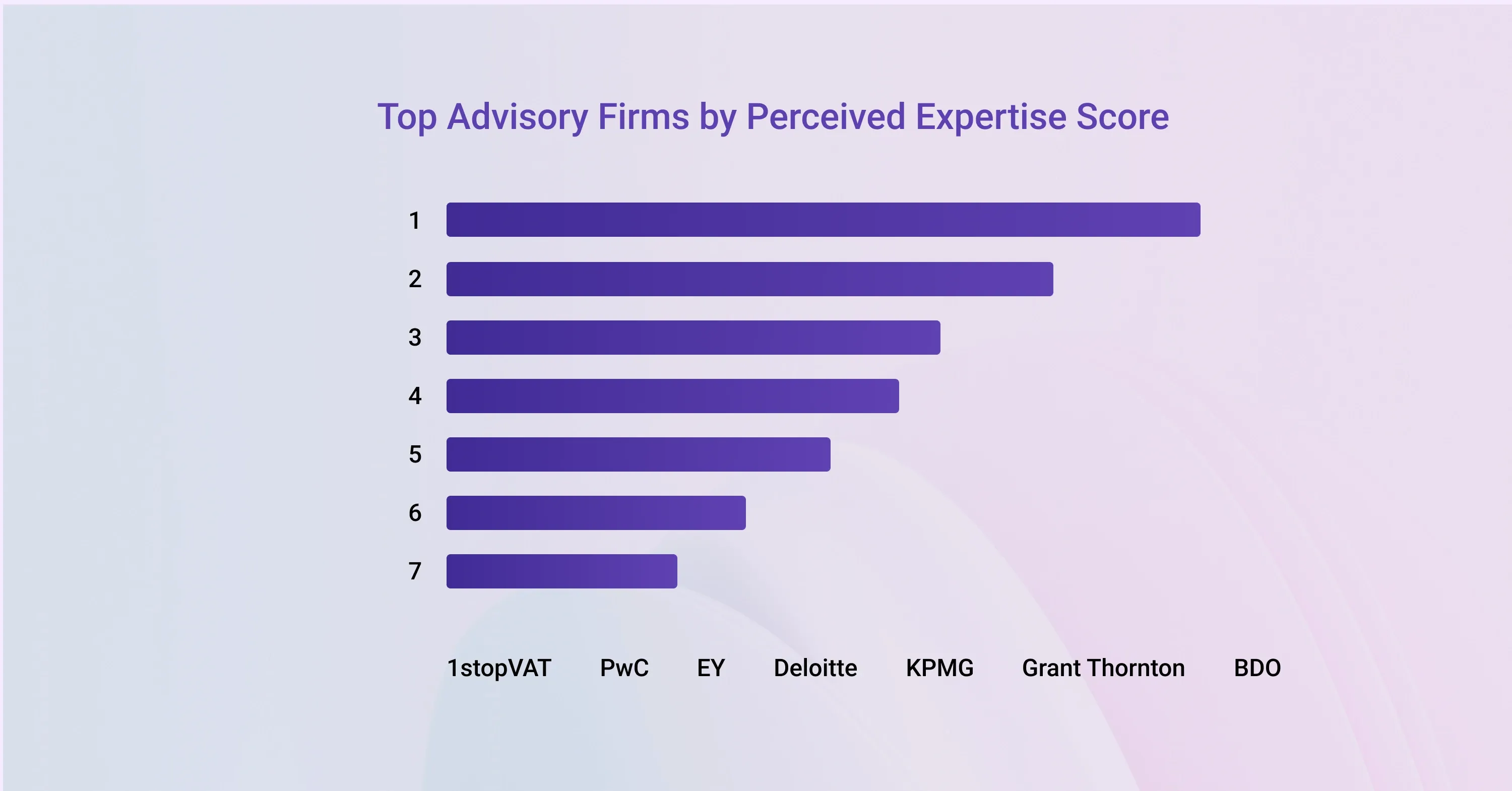
Horizontal bar chart showing top VAT advisory firms ranked by perceived expertise score, with 1stopVAT leading ahead of PwC, EY, Deloitte, KPMG, Grant Thornton, and BDO

Below is a curated list of firms frequently cited by CFOs, controllers, and legal counsels for their hands-on knowledge of EU invoicing rules. Selection criteria included breadth of country coverage, depth of tax-tech integration, bench strength, and client testimonials.

1. 1stopVAT

With 40+ certified tax specialists covering more than 100 jurisdictions, 1stopVAT positions itself as a single point of contact for VAT registration, periodic filings, and invoicing consultancy. Clients value the blend of automated tools and human review, which streamlines cross-border processes without losing the nuance of local legislation.

2. Deloitte Tax & Legal

Deloitte’s dedicated e-Invoicing Centre of Excellence leverages legal expertise and SAP/Oracle integration specialists. Their multi-country compliance blueprints have helped large retailers standardize invoice flows across 18 Member States in under a year.

3. PwC Indirect Tax Network

PwC offers real-time monitoring dashboards and deep policy contacts in Brussels. Their “VAT Eye” methodology flags upcoming changes six to twelve months out, an advantage for companies operating on long budgeting cycles.

4. KPMG Global Compliance Management Services

KPMG’s approach pairs regional tax leads with process engineers who optimize source-to-pay systems. Their Polish practice, in particular, has guided hundreds of firms through KSeF test phases, avoiding common XML schema errors.

5. EY Global Indirect Tax

EY’s Indirect Tax practice integrates legal drafting, change management, and IT advisory. Their “OneClick” readiness assessments benchmark a company’s current invoicing setup against EU best-in-class standards, identifying gaps in minutes rather than weeks.

6. Grant Thornton International

Grant Thornton serves mid-market clients that need pragmatic, cost-effective solutions. Their hands-on workshops demystify clearance models and help smaller finance teams build internal capacity instead of outsourcing everything.

7. BDO Global Indirect Tax Services

BDO’s footprint in 164 countries makes it a natural fit for businesses with both EU and non-EU obligations. Their phased implementation plans prioritize high-risk jurisdictions first, delivering early compliance wins.

For in-depth reviews, hands-on comparisons, and additional firms, see Top VAT consultants 2025.

Each adviser has unique strengths. Evaluate them against your budget, system landscape, and internal resources before signing a mandate.

Actionable Compliance Checklist for Finance Teams

You may not hire an advisor tomorrow. Still, the following steps can drastically lower your risk of non-compliance.

  • Perform a jurisdictional heat map

    • Rank your EU sales countries by invoice volume and VAT exposure
  • Validate master data quality

    • Verify customer VAT IDs against VIES nightly
  • Map ERP fields to local schemas

    • Use configurable templates rather than hard-coded scripts
  • Implement real-time validation gates

    • Reject invoices missing mandatory fields before release
  • Archive invoices in both structured and human-readable formats

    • Retention: typically ten years, but check local rules
  • Monitor legislative calendars

    • Subscribe to EU tax updates, RSS feeds, and advisor newsletters
  • Train cross-functional teams quarterly

    • Include sales, logistics, and support, not just finance
  • Conduct mock audits

    • Pick 25 invoices per quarter, replicate how a tax inspector would examine them

If you want a practical, step-by-step roadmap to safeguard your invoicing and reporting, review the VAT Reporting Made Simple: Best Practices for Businesses guide.

Ticking these boxes does not guarantee perfection, but it can cut your rejection rate in half and fortify defense files if a real audit occurs.

What Is EU Invoicing Compliance?

EU invoicing compliance means ensuring every sales invoice aligns with local VAT law: the correct VAT rate, mandatory fields like buyer VAT ID and issue date, the right electronic format (XML, UBL, or PDF/A), submission through the state portal within the prescribed time frame, and secure archiving for up to ten years.

Conclusion

EU invoicing rules grow more complex each year, but non-compliance is no longer an option. Calling on leading advisors on EU invoicing rules removes guesswork, spares you costly errors, and frees internal teams to focus on growth. Whether you partner with 1stopVAT for one-stop oversight or tap a Big Four firm for a multi-country rollout, the critical step is to act before the next directive lands. Adopt the checklist above, engage specialized help where needed, and treat compliant invoicing as a core business asset rather than a bureaucratic chore.

E-invoicing focuses on the electronic format and transmission of invoices, while digital reporting refers to sending transactional data to tax authorities, sometimes in real time. Many EU states bundle both requirements.

Generally no, as long as the electronic invoice is authenticated, legible, and stored securely for the statutory retention period. Some buyers may still request courtesy PDFs for their own archives.

Deadlines vary: Italy allows 12 days, Spain’s SII requires four days (immediate supply), and Poland’s KSeF will likely enforce two-day windows. Always confirm the current local rule.

Yes, but legal liability typically remains with the seller. You must ensure the provider follows ISO-certified security standards and maintains robust audit trails.

Penalties range from flat fees (around €200 per invoice in Italy) to percentage-based fines on undeclared VAT in France and Germany. Repeated offenses can trigger audits or license suspension.

Simple Compliance

Free consultation with 1StopVAT experts

You Might Also Like

Discover more insights and articles

Business executives shaking hands during a corporate meeting, symbolizing partnership, trust, and business growth strategy

What is a VAT number and how to verify it

A mistyped VAT number looks like a small error but it can freeze cross-border shipments, delay refunds, and trigger tax audits. Understanding what a VAT number is, how it is structured, and how to verify it keeps sales flowing and penalties at bay.

A single narrative runs through this guide: by the time you reach the last paragraph, you will know exactly why VAT numbers matter, what they look like in different countries, and the fastest ways to confirm that any number you receive is valid.

Flat lay image of business tax planning with a calculator, financial charts, smartphone, and wooden TAX blocks, illustrating financial analysis and accounting strategy

How to Register for VAT in the EU: Step-by-Step Guide

A single missed VAT registration can freeze shipments at customs, wipe out profit margins with back-dated tax, or trigger penalties that grow by the day. This guide walks you through the entire EU VAT process, country differences, and the paperwork you need so that none of that happens to you.

Business professional organizing and reviewing financial documents with color-coded tabs, highlighting structured document management and financial analysis workflow

Best VAT Number Verification Services for Businesses

Businesses that trade across borders have a simple but high-stakes question to answer every single day: is the VAT number on the invoice valid? A single typo or a fraudulent ID can lead to denied input tax deductions, penalties, and sticky audits. Choosing the best services for VAT number verification is no longer optional, it is a shield against mounting compliance risk.

A quick overview follows, then we will unpack each service, show you exactly how to use it, and close with practical tips that keep costly errors out of your B2B workflow.