A person calculates financial data on a calculator over reports and charts, symbolizing analysis, planning, and business performance tracking

Comparing VAT Registration Services: What to Look For

Comparing VAT registration services can be risky: miss one detail and your application may be delayed or rejected. In the UK alone, 17% of VAT applications failed last year, affecting over 50,000 businesses. Choosing the right provider is no longer optional - it protects revenue and cash flow. Below are the four factors every finance or operations lead should assess: pricing, registration speed, support quality, and real-world trade-offs.

Content authorBy Rūta ŠvobienėPublished onReading time6 min read

What this comparison covers

In the next few minutes you will learn:

  • How pricing models vary and which hidden costs matter most

  • Why turnaround time is more than a number on a website

  • The support channels seasoned exporters refuse to compromise on

  • Practical advantages and drawbacks of outsourcing VAT registration, illustrated with short real-world examples

Each section builds on the last, so by the end you will have a simple checklist for your own VAT provider comparison.

Pricing: the numbers behind the headline fee

Price is the first filter most businesses apply, yet it is rarely apples to apples. A flat £399 “registration package” may exclude filings, translations, or local fiscal representation.

The core elements that make or break total cost are:

  • Registration fee: one-off cost that ranges from £150 to £800 in the UK, €300–€1,200 in the EU

  • Mandatory documents: translations, notarisation, or apostilles that can add 20%–40 %

  • Fiscal representation: required in some EU states for non-EU companies, often billed as an annual retainer

  • Ongoing compliance: monthly or quarterly filings, Intrastat and SAF-T reports

A UK ecommerce retailer we worked with found a “cheaper” provider at £350, but paid £950 after notarised translations and courier charges surfaced. Had they compared full-year totals, the initial front-runner was actually the costliest.

When scanning price lists, ask for a single figure covering 12 months of service, not just the registration. This avoids the drip-pricing trap and makes best VAT solutions easier to benchmark side by side.

For a granular breakdown of what’s usually included - and hidden costs to watch for - see the VAT Compliance Checklist for Startups and Small Businesses.

The next question is whether a higher fee buys you faster approval.

Registration speed: when “standard” is not fast enough

A listed turnaround of 4–6 weeks may look fine - until you discover HMRC’s rejection rate and realise a delay can mean lost holiday-season revenue. Speed depends on two levers:

  • Provider workflow: automated data capture, pre-submission validation, and direct API links to tax portals

  • Local expertise: familiarity with quirks, for instance Belgium’s preference for original trade licences or Italy’s need for a PEC email

1stopVAT, for example, pairs automated form filling with a team of 40+ certified tax specialists across 100+ countries, reducing the back-and-forth that often drags an application into month two.

Real-world snapshot: A SaaS platform entering Germany needed a DE VAT ID before launching ads. By using a provider with in-country signatories, they received the Steuernummer in 9 days, compared with the typical 4-week queue quoted by rivals.

If expediting approval is mission-critical, follow the steps outlined in the Expedited VAT Registration: Checklist for Fast EU Entry for tactics to avoid hold-ups and common application pitfalls.

When requesting quotes, insist on:

  • Median and worst-case timelines, not just best-case

  • Current backlog data, updated weekly

  • Evidence of direct contacts within tax authorities

Quick approvals are worthless if you cannot get help when a query lands, which brings us to support.

Quality of support: human expertise over chatbots

VAT rules shift constantly. The EU’s e-commerce package alone collected €33 billion in 2024, so auditors scrutinise cross-border sellers. When HMRC or an EU office raises a question, you need a knowledgeable human on the line.

Support quality hinges on three dimensions:

  • Availability: phone, email, and live chat hours - ideally 24 / 5 to cover different time zones

  • Seniority: direct access to VAT lawyers or only first-line agents reading scripts

  • Escalation time: maximum hours before a query reaches a senior specialist

Consider the words of Lubbock Fine’s Jas Dhillon, who notes that swift access to experts is essential for approvals. A provider without tier-one support exposes you to mounting penalties if queries stay unresolved.

For a deeper dive into how professional support reduces delays, errors, and risk, read VAT Compliance & Consultancy: Why Expert Advice Matters.

Checklist when evaluating support:

  • Ask for the name and credentials of the lead consultant on your file

  • Request SLAs in writing: response within 4 hours and resolution within 24 hours is achievable

  • Test them: send a detailed question before signing and measure reply quality

Solid support mitigates risk, but every outsourcing option carries trade-offs. Let us balance the scales.

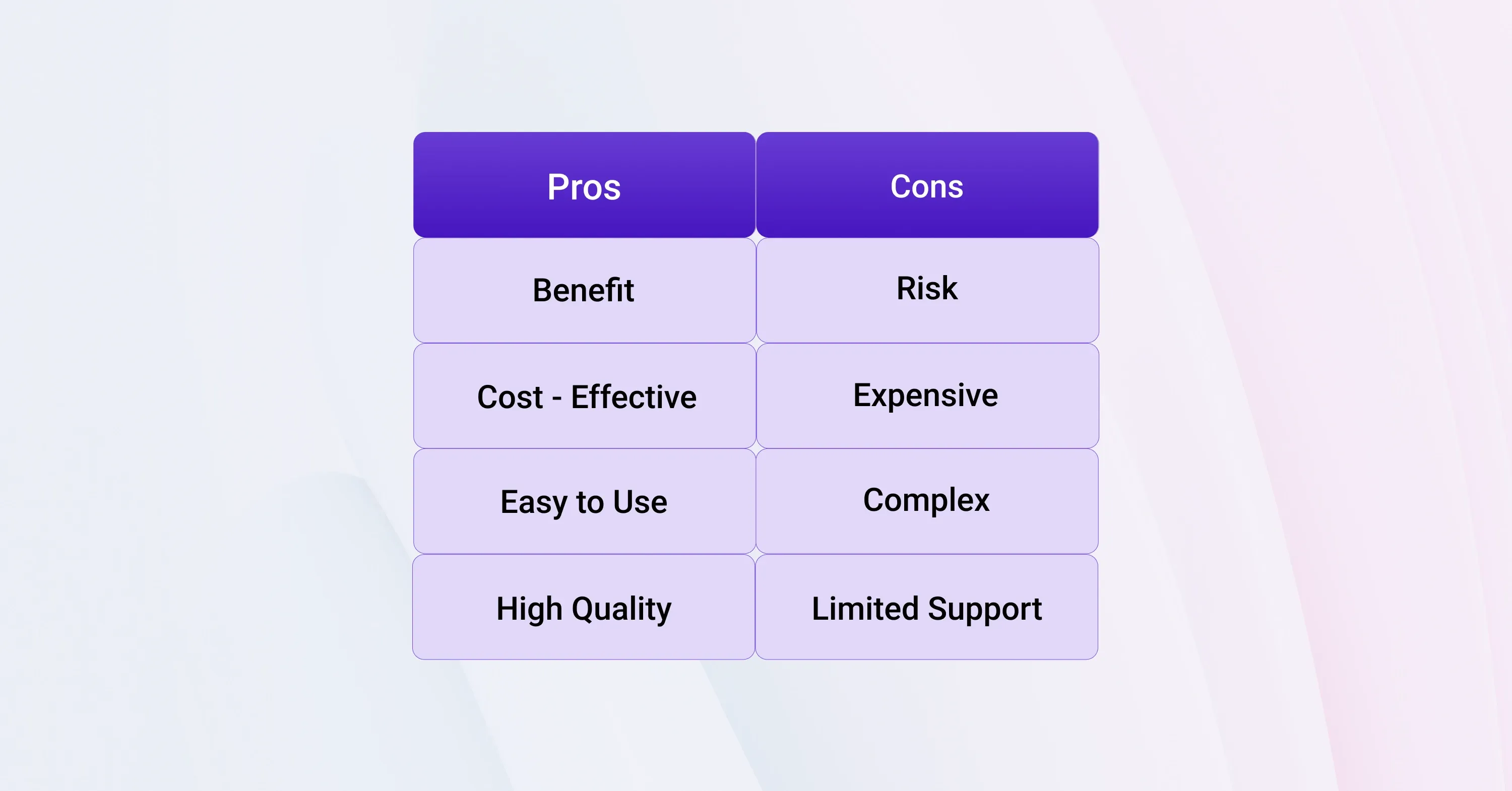
Pros and cons of outsourcing your VAT registration

A clean comparison table visually presenting pros and cons, highlighting benefits such as cost-effectiveness and ease of use alongside risks like complexity and limited support

Outsourcing is rarely all good or all bad. Below is a balanced view drawn from clients ranging from marketplace sellers to mid-size software firms.

Advantages

  • Time savings: finance teams bypass paperwork and avoid 234 000 annual UK registrations queues

  • Reduced error rate: specialist checks prevent omissions that trigger rejections

  • Scalability: multi-country providers like 1stopVAT handle OSS, IOSS, and local filings in one portal

  • Predictable cost: bundled compliance can be budgeted annually

For insight into choosing the right mix of in-house and external VAT support, including a detailed cost and process comparison, see Tax Consultation: Why Businesses Need Professional Guidance.

Drawbacks

  • Less internal knowledge: your team may forget procedural details, risking dependency

  • Data sharing: sensitive turnover figures move outside the company

  • Variable quality: the market is fragmented, and not every agency employs qualified tax lawyers

An online fashion brand initially managed VAT in-house, attracted by OSS simplicity. Growth forced them to register locally in Spain, France, and Italy, each demanding local language filings. Outsourcing freed one full-time employee but added £4 500 in yearly fees. Weighing those numbers against staff costs and late-filing penalties clarified the decision. The trade-off often boils down to control versus certainty. Once you identify your threshold for risk, the final step is to apply the criteria we have discussed to a shortlist.

How to Compare VAT Registration Services

Key factors when comparing VAT registration services are price transparency, realistic registration timelines, expert human support with clear SLAs, and a balanced view of outsourcing pros and cons. Evaluate each point across a 12-month horizon to reveal the true cost and benefit of a provider.

Conclusion

When you compare VAT registration services, resist the urge to look at price alone. Map out total annual cost, verify median approval times, test the depth of human support, and weigh the strategic trade-offs of outsourcing. With those datapoints in hand, the decision moves from guesswork to clear-cut financial logic, letting your team focus on growth instead of red tape.

Most small companies spend between £600 and £1 500 for UK registration and 12 months of filings. Higher figures arise when translations, fiscal representation, or historic corrections are needed.

Not necessarily. Speed depends on workflow efficiency and local relationships, not only price. Some mid-priced firms file digitally and achieve turnaround times rivaling premium providers.

Yes, if you only sell B2C goods within the EU and are comfortable with portal filings. Complexity grows once you store stock in multiple countries, at which point local numbers and intrastat may be mandatory.

HMRC or the EU tax office will issue clarification requests. You typically have 14–30 days to respond. A good provider drafts the reply and resubmits documents, keeping your place in the queue.

With a professional VAT registration service, approvals typically take 2–6 weeks, depending on the country and documentation quality. Expedited registrations can be completed in 7–14 days when local experts and pre-submission checks are used, helping avoid delays and rejections.

Simple Compliance

Free consultation with 1StopVAT experts

You Might Also Like

Discover more insights and articles

A clean flat-lay image showing tax analysis documents, a calculator, and a tablet displaying financial charts, representing modern tax planning and financial reporting

Handling VAT for Digital Services: A Practical Guide

Selling digital products offers an incredible opportunity to scale a business globally without the logistics of shipping physical goods. However, once you cross borders, tax obligations follow you. Learninghow to handle VAT for digital servicesis no longer just a task for large corporations; it is a fundamental requirement for any creator, developer, or SaaS company selling internationally.

The rules for taxing electronic services differ significantly from physical goods, often shifting the tax liability from the seller's location to the customer's location. This guide provides a clear pathway through the regulations, helping you identify your obligations, register correctly, and manage ongoing compliance without disrupting your operations.

A professional workspace showing hands calculating taxes with a calculator, laptop, notebook, and printed tax documents, illustrating business tax planning and financial analysis

Steps to register for sales tax in the US

Every business that ships products or provides taxable services across state lines eventually hits the same wall: you must collect and remit sales tax or risk fines and retroactive assessments. The rules vary by state, but the registration sequence follows a recognizable pattern. This guide walks you through that sequence, flagging the biggest pitfalls and shortcuts, so you spend less time wrestling with bureaucracy and more time selling.

Running a company already devours time. U.S. taxpayers as a whole will spend**7.9 billion hours and $546 billion in compliance costs**this year. Following the steps below will keep your share of those hours from spiraling.

Business professional analyzing tax compliance and financial obligations through a magnifying glass with digital tax and accounting icons

Leading Advisors on EU Invoicing Rules: Stay Compliant

Businesses selling in Europe cannot afford invoicing errors. One missing field or late transmission can trigger penalties, audits, or even shipment holds at the border. That pressure explains why so many companies now turn to leading advisors on EU invoicing rules to interpret fast-moving legislation and design frictionless processes.

EU rules evolve quickly and differ country by country. This article explains what the directives actually demand, shows how advisors reduce risk, ranks the most trusted firms, illustrates typical mistakes, and ends with a hands-on checklist your finance team can start using today.

Business executives shaking hands during a corporate meeting, symbolizing partnership, trust, and business growth strategy

What is a VAT number and how to verify it

A mistyped VAT number looks like a small error but it can freeze cross-border shipments, delay refunds, and trigger tax audits. Understanding what a VAT number is, how it is structured, and how to verify it keeps sales flowing and penalties at bay.

A single narrative runs through this guide: by the time you reach the last paragraph, you will know exactly why VAT numbers matter, what they look like in different countries, and the fastest ways to confirm that any number you receive is valid.