

Overview
We will cover:
- Typical tax pitfalls for internet sellers
- A step-by-step framework to shortlist, vet, and hire internet business tax experts
- A quick cost-benefit exercise to see if outside help pays for itself
- How digital tax advisors streamline cross-border VAT, GST, and sales-tax filings
- Key stats and resources you can quote to teammates and investors
By the end, you will know exactly what to ask, what to budget, and how to monitor your consultant’s work.
Step 1: Map your global tax exposure
Before calling any expert, sketch where your customers are and what you sell. Different rules apply to physical goods, digital downloads, and subscription services.
- List every country or US state shipping address from the past 12 months
- Note annual revenue per territory to spot thresholds (EU distance selling, US economic nexus, etc.)
- Identify sales channels: own website, marketplaces, app stores
A solid map helps you explain needs clearly and prevents scope creep later. It also reveals hot spots: EU regulators collected €6.8 billion via the expanded One Stop Shop (OSS) in just six months, proving authorities are watching online sellers closely.
For further reading on navigating these requirements, see the Sales Tax Registration and Compliance Guide for Global Sellers.
Clear takeaway: know your footprint first, then hunt for expertise.
Step 2: List the services you actually need
Tax consultants offer everything from one-off registrations to full-service compliance. Decide what solves your current pain.
Start light by jotting problems that slow you down, then match them with market offerings.
- Registration only: single country VAT/GST number
- Ongoing compliance: periodic returns, payments, audit support
- Advisory: one-off calls to review pricing, marketplace agreements, or new tax laws
- Training: upskill your in-house finance team
Sales of low-value goods also come with new filing duties: EU countries collected €2.0 billion in VAT on consignments ≤€150. If you ship small parcels, you likely need Import OSS support too.
For SaaS and digital businesses needing to understand VAT in the EU, the detailed walk-through at VAT Compliance for SaaS and Digital Services in the EU is recommended.
Summarize your chosen bundle, then move on to market research.
Step 3: Shortlist consultants with proven regional know-how
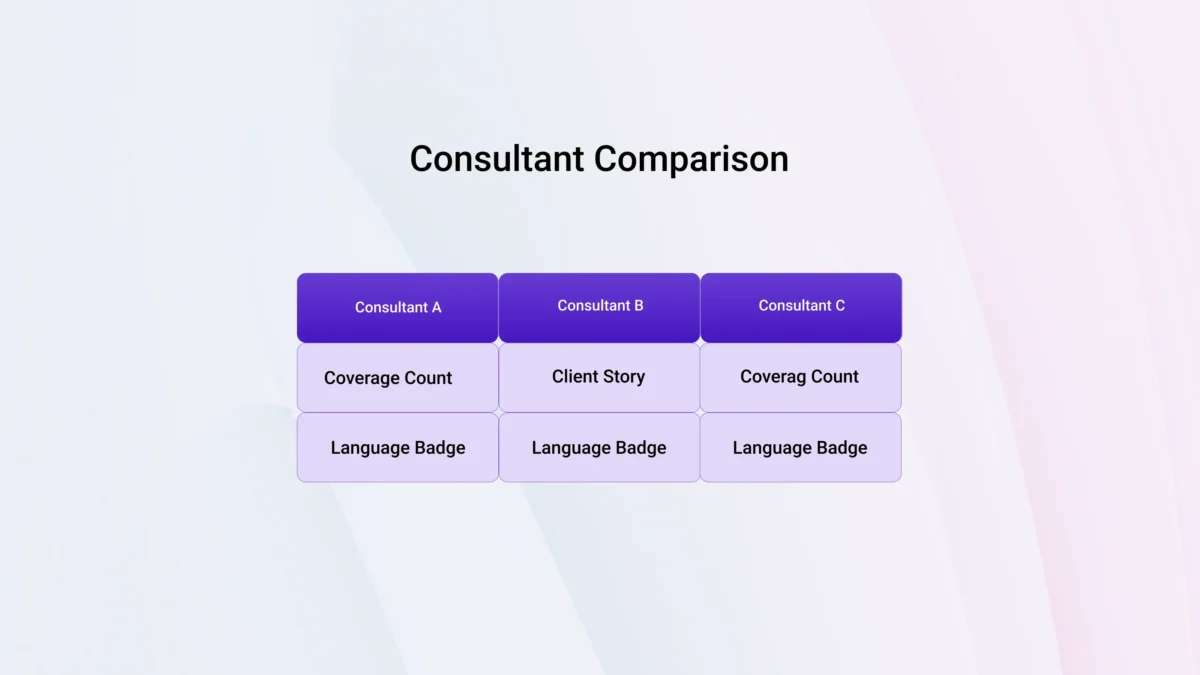
You want specialists who have wrestled with the very filings you face.
- Check the number of countries they cover
- Ask for client stories from businesses of similar size or sector
- Verify language support for local tax offices
- Look for proactive updates: for example, ViDA measures already have target go-live windows stretching from 2025 to 2035
Providers such as 1stopVAT, whose 40-plus certified specialists handle VAT in 100+ jurisdictions, illustrate the breadth you might require if scaling fast.
For perspective on why and how expert consultants make a difference, and the full spectrum of their services, check VAT Compliance & Consultancy: Why Expert Advice Matters.
Finish by creating a table that compares each candidate’s coverage to your territory map from Step 1.
Step 4: Run a cost-benefit check
Hiring outside help feels expensive until you compare it with penalties and lost focus.
- Gather quotes: flat fee per return, percentage of turnover, or tiered bundles
- Estimate internal costs: staff hours, software, training
- Add potential fines: late VAT filings in Germany, for example, incur up to 10% of tax due
- Include opportunity cost: founders freed from admin can work on growth
In the EU, removing the €22 import-VAT exemption generated €700 million in extra revenue over six months. Authorities clearly mean business, so the price of mistakes is rising.
A basic calculation often shows external consultants paying for themselves within a quarter. To better understand these economics and setup decisions for international business, refer to the guide on VAT Consulting for International Businesses.
Step 5: Evaluate their digital tooling and reporting style
Modern compliance is data heavy. Even the smallest seller may juggle thousands of transactions per month.
Bullet list of what to watch:
- Secure client portal for document uploads and status tracking
- Automatic currency conversion and exchange-rate capture
- API integrations with shopping carts or ERP for smooth data pulls
- Dashboard of upcoming filings and payment deadlines
Why it matters: 88% of UK tax agents use specialist software for HMRC filings, which speeds delivery and reduces human error. Meanwhile, 87% of accounting practices reported higher client satisfaction after moving to cloud tech.
For a deep dive on automation, integrations, and reporting technology, read Tax Technology Tools – VAT Compliance Automation.
A firm like 1stopVAT couples human expertise with secure tools, letting you keep one eye on everything while freeing time for product development.
Step 6: Check credentials, communication, and cultural fit
Numbers matter, yet people deliver the work.
A responsive consultant prevents panic during audits or legislative changes.
- Verify certifications: Chartered Accountant, Certified Tax Adviser, or country-specific licenses
- Review how they explain complex topics. Do they use plain language or jargon?
- Ask about response times and account managers
- Request a sample memo or VAT return to judge clarity
Client calls help confirm these soft factors. You want a digital tax advisor who feels like a teammate, not a ticketing system.
With trust built, you can move to onboarding.
Step 7: Onboard, monitor, and review performance
Hiring is just the beginning. Smooth onboarding ensures data flows correctly and deadlines are clear.
Sample onboarding checklist
- Sign data-processing agreements and share prior returns
- Grant read-only access to sales platforms
- Agree on return calendars and communication channels
- Schedule quarterly review calls for law updates and performance metrics
For holistic checklists and ongoing review best practices, see Aligning Cross-Border Tax and Accounting Practices for SMEs.
Continued monitoring matters. 71% of agents knew about Making Tax Digital quarterly reporting requirements, yet some still miss deadlines. Keep an eye on reminders, especially as ViDA changes roll out across Europe.
By the first anniversary, measure KPIs: error rates, on-time filings, and hours your team saved. Adjust scope or switch providers if goals are not met.
What makes a great tax consultant for an online business?
A top consultant combines multi-country expertise, transparent pricing, secure digital tools, rapid communication, and a track record of reducing compliance risk. They stay ahead of reforms like OSS and ViDA, prepare accurate VAT, GST, and sales-tax filings, and free founders to focus on growth.
Conclusion
Choosing the right tax consultants for online businesses is a strategic decision. Map your exposure, define service needs, vet regional expertise, weigh costs against growing penalties, and assess digital capabilities plus human rapport. Follow these seven steps and your next VAT, GST, or sales-tax deadline will feel routine rather than stressful.
Frequently asked questions
Costs vary: small sellers might pay €100–€300 per monthly return, while multi-country packages can range from €2 000 to €5 000 per year. Complexity, transaction volume, and advisory extras drive pricing.
Not necessarily. Many firms offer global coverage, handling EU VAT, Canadian GST/HST, and US state filings under one roof. Always confirm territory support during your shortlist process.
Software speeds data processing and filings, yet human expertise is vital for interpreting law changes, audit defense, and nuanced questions. The best solution blends both.
You risk retroactive registration, back taxes, interest, and penalties. For example, EU customs collected **€1.1 billion** of low-value import VAT through the Import OSS alone in six months, showing how enforcement has tightened.
With organized records, basic onboarding can finish in two weeks. Complex multi-channel sellers may need four to six weeks to map data feeds, register in new countries, and test filings.