A business professional interacts with a transparent digital dashboard displaying charts, bar graphs, and analytics icons in a modern blue-toned workspace.

Finding the Right VAT Consultant for E-commerce

Running an online store across borders is exciting until you hit the maze of VAT rules. Missteps can cost real money, yet many founders still juggle filings on their own. Below is a clear roadmap to pick VAT consultants for e-commerce sellers, reduce risk, and stay focused on growth.

Content authorBy Rūta ŠvobienėPublished onReading time6 min read

What you’ll learn

You will see the main VAT problems online merchants face, the payoff of hiring professional e-commerce tax advisors, and a step-by-step process to vet and onboard the right partner. By the end, you will know exactly which documents to prepare, which questions to ask, and how to measure success once a consultant is on board.

1. Map your cross-border VAT footprint

Before you speak with any online VAT specialists, understand where your store triggers VAT duties. A quick self-audit keeps the conversation focused and shows consultants you know your numbers.

  • List all countries you ship to, the average order value, and annual revenue per destination
  • Note local thresholds: distance-selling limits in the EU were replaced by the One-Stop-Shop, but separate rules exist in the UK, Australia, and Canada
  • Flag warehouses or third-party logistics locations, because stock held locally often creates a “fixed establishment” and new VAT obligations

When you place this map on the table, potential advisors can instantly tell if you need a Union OSS, Import OSS, or traditional local registrations.

A growing number of sellers are entering those schemes. €20 billion in VAT was collected through the EU OSS / IOSS frameworks in 2022 alone, proof that digital trade is firmly on the tax radar.

Good groundwork here makes every later step faster and cheaper. For more on the basics of mapping your VAT obligations, see Marketplace VAT Obligations for Online Sellers: What You Need to Know.

2. Decide between DIY and hiring e-commerce tax advisors

Some platforms offer basic tax tools, but they rarely cover multiple markets in depth. Ask yourself:

  • Do I sell in more than three VAT jurisdictions?
  • Is my annual online revenue above €100 k?
  • Would a penalty equal to 5 % of turnover hurt?

If you checked any box, outside help is prudent. Professional advisors keep track of fast-moving rules; for instance, €6.3 billion was declared via the Import OSS in 2024, signaling that low-value import rules shift constantly.

Choosing a consultant transfers the monitoring burden and significantly lowers late filing risks. For a deeper comparison between in-house efforts and working with a consultancy, visit VAT Compliance & Consultancy: Why Expert Advice Matters.

3. Shortlist online VAT specialists with the right reach

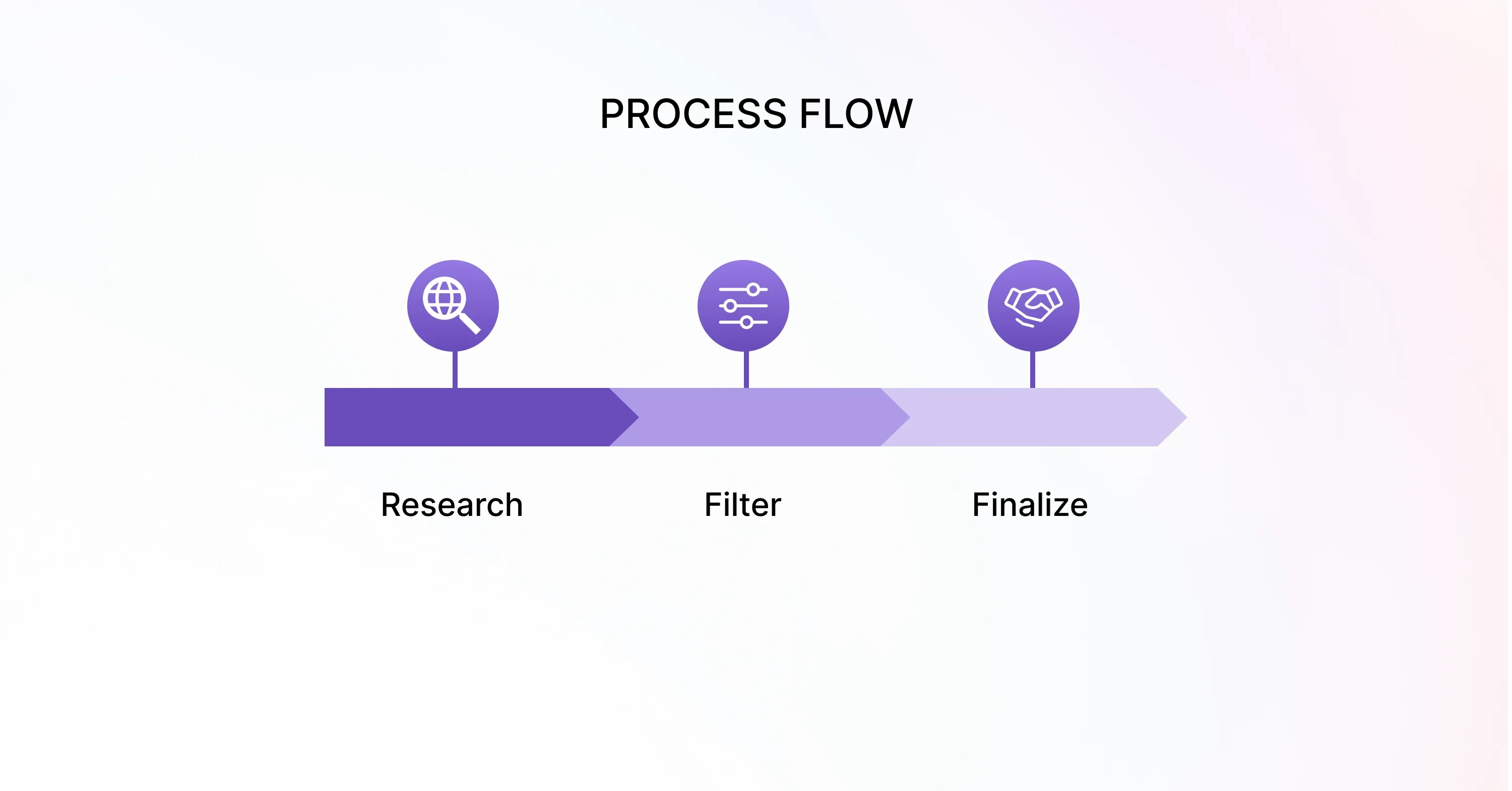
A three-step process flow infographic showing Research, Filter, and Finalize as purple arrow stages with matching icons of a globe, sliders, and a handshake.

Start with five to seven firms that actively work in your key markets.

How to build the list

  • Check official registers: most EU countries publish lists of licensed tax representatives
  • Look for content: firms writing up OSS changes in plain language show applied knowledge
  • Ask peers selling similar product categories

Beware of general accountants who “also do VAT.” Cross-border e-commerce needs niche expertise. Providers such as 1stopVAT, whose 40+ certified tax specialists cover 100+ countries, illustrate what true geographic reach looks like.

Conclude this phase by drafting a two-column sheet: must-have markets and nice-to-have markets. Remove any firm missing a must-have.

If you want more insight into VAT consulting and its unique value for international businesses, check VAT Consulting for International Businesses.

4. Evaluate technical capability and human expertise

Software alone is not enough, yet manual work without tools is slow. Aim for a balanced mix.

Key checkpoints

  • Filing scope: Union OSS, non-Union OSS, Import OSS, plus local VAT returns where needed
  • Data ingestion: Can the consultant pull order data from Shopify, Amazon, and ERP exports?
  • Error handling: Ask for an example where they detected and corrected a client’s wrong VAT rate
  • Point of contact: You want a named manager, not a generic ticket inbox

End the discussion by requesting sample reports. Consistent, readable dashboards make reconciliation with your bookkeeping painless.

For more strategies on compliance that scales with global e-commerce (including VAT registration tips and maintaining proper documentation), see VAT services for US companies: How to Stay Compliant When Selling Internationally.

5. Check credentials, communication style, and fees

Entering a multi-year engagement is easier when basics line up.

  • Credentials: active tax adviser license, professional indemnity insurance, and proof of continued education
  • Language skills: if you sell in France, Spain, and Germany, do they cover all three native languages for queries from local tax offices?
  • Fee model: fixed retainer plus usage-based filings is common. Percent-of-revenue deals often cost more in the long run

Wrap up by confirming response times in writing. A three-day window is standard for routine questions, next-day support for audits.

For an explanation of typical cost structures and why investing in expertise often pays for itself, see VAT Compliance & Consultancy: Why Expert Advice Matters.

6. Run a pilot and review compliance metrics

Start small to limit risk.

Pilot setup

  1. Choose one major market or one OSS return cycle
  2. Share three months of full sales and refund data
  3. Agree on deliverables: draft return, reconciliation report, and list of questions

During the pilot, track:

  • Accuracy: VAT due vs. your own estimate
  • Timeliness: draft delivered at least one week before the legal deadline
  • Communication: clear answers within the promised response time

If the consultant nails these points, scaling to more markets is usually smooth.

7. Keep the relationship agile as you grow

E-commerce sales rarely stay static. In 2023, 23.8% of EU enterprises reported online sales and the share keeps climbing. As you release new product lines or marketplaces, brief your consultant early so they can adjust registrations or VAT rates.

Good practices here:

  • Quarterly check-ins to review new sales channels
  • Annual fee review linked to order volume bands
  • Joint calendar of upcoming regulatory changes, for example, the 2028 EU VAT in the Digital Age package

A flexible working style prevents last-minute surprises and preserves a healthy partnership.

To understand the evolving regulatory landscape and approaches to ongoing monitoring, see VAT Compliance Checklist for Startups and Small Businesses.

One-sentence takeaway

A VAT consultant for e-commerce is a licensed tax expert who registers your store in the right countries, prepares and files cross-border VAT returns such as Union or Import OSS, and answers tax office queries so you can focus on selling.

Conclusion

Choosing the right VAT consultant is less about flashy software and more about proven knowledge, clear communication, and a process that grows with your store. Map your footprint, vet candidates carefully, run a focused pilot, and keep reviewing performance. With a capable partner handling VAT, you gain time and confidence to expand into new markets without fear of compliance missteps.

They typically ask for sales reports per country, marketplace fees, shipping invoices, and any prior VAT returns. These files help them verify transaction values and tax rates before taking over filings.

Most firms work on a fixed monthly retainer that starts around €300 for a single OSS filing and rises with added markets. Complex setups with local returns can reach €1 500 or more per month.

Once you store goods locally, you often need a regular VAT registration in that country. Your consultant will still file OSS for cross-border distance sales while handling local returns for domestic orders from the warehouse.

Digital services fall under the non-Union OSS for non-EU sellers and the Union OSS for EU sellers. A consultant is helpful because local rules on electronic services, broadcasting, and telecom still vary and audits happen frequently.

Yes, the firm works with startups and midsize sellers as well as large enterprises. Acting as a single point of contact across 100+ countries, it removes the burden of dealing with multiple local agents even for lean teams.

Simple Compliance

Free consultation with 1StopVAT experts

You Might Also Like

Discover more insights and articles

A clean flat-lay image showing tax analysis documents, a calculator, and a tablet displaying financial charts, representing modern tax planning and financial reporting

Handling VAT for Digital Services: A Practical Guide

Selling digital products offers an incredible opportunity to scale a business globally without the logistics of shipping physical goods. However, once you cross borders, tax obligations follow you. Learninghow to handle VAT for digital servicesis no longer just a task for large corporations; it is a fundamental requirement for any creator, developer, or SaaS company selling internationally.

The rules for taxing electronic services differ significantly from physical goods, often shifting the tax liability from the seller's location to the customer's location. This guide provides a clear pathway through the regulations, helping you identify your obligations, register correctly, and manage ongoing compliance without disrupting your operations.

A professional workspace showing hands calculating taxes with a calculator, laptop, notebook, and printed tax documents, illustrating business tax planning and financial analysis

Steps to register for sales tax in the US

Every business that ships products or provides taxable services across state lines eventually hits the same wall: you must collect and remit sales tax or risk fines and retroactive assessments. The rules vary by state, but the registration sequence follows a recognizable pattern. This guide walks you through that sequence, flagging the biggest pitfalls and shortcuts, so you spend less time wrestling with bureaucracy and more time selling.

Running a company already devours time. U.S. taxpayers as a whole will spend**7.9 billion hours and $546 billion in compliance costs**this year. Following the steps below will keep your share of those hours from spiraling.

Business professional analyzing tax compliance and financial obligations through a magnifying glass with digital tax and accounting icons

Leading Advisors on EU Invoicing Rules: Stay Compliant

Businesses selling in Europe cannot afford invoicing errors. One missing field or late transmission can trigger penalties, audits, or even shipment holds at the border. That pressure explains why so many companies now turn to leading advisors on EU invoicing rules to interpret fast-moving legislation and design frictionless processes.

EU rules evolve quickly and differ country by country. This article explains what the directives actually demand, shows how advisors reduce risk, ranks the most trusted firms, illustrates typical mistakes, and ends with a hands-on checklist your finance team can start using today.

Business executives shaking hands during a corporate meeting, symbolizing partnership, trust, and business growth strategy

What is a VAT number and how to verify it

A mistyped VAT number looks like a small error but it can freeze cross-border shipments, delay refunds, and trigger tax audits. Understanding what a VAT number is, how it is structured, and how to verify it keeps sales flowing and penalties at bay.

A single narrative runs through this guide: by the time you reach the last paragraph, you will know exactly why VAT numbers matter, what they look like in different countries, and the fastest ways to confirm that any number you receive is valid.