

Mastering EU E-Invoicing and SAF-T: A 7-Step Compliance Guide for 2025
E-invoicing is now a cornerstone for tax management across the European Union. Recent figures show that the share of EU enterprises sending electronic invoices jumped from 8.2% in 2011 to 32.2% in 2020. This growth is propelled by new rules and real-time reporting obligations that aim to reduce €11 billion in annual VAT fraud losses. For indirect tax managers or CFOs of multinational companies, understanding electronic invoicing compliance can streamline processes and cut costs by up to 72% compared to paper-based invoicing. Below is a straightforward guide to help you grasp EU electronic invoicing laws, master SAF-T real-time reporting, and meet upcoming mandates.
Step 1: Familiarize Yourself with the EU E-Invoicing Landscape
Electronic invoicing compliance starts with a clear grasp of current EU electronic invoicing laws. The “VAT in the Digital Age” (ViDA) package sets July 2030 as the last date for mandatory e-invoicing in all intra-EU B2B transactions.
- Each EU country has its own quirks. Hungary has required real-time invoice reporting since January 2021.
- Italy has made e-invoicing compulsory for B2B, B2G, and B2C since 2019, and expanded it to all businesses in 2024.
To better understand how e-invoicing regulations differ between B2B and B2C models – and why this distinction matters – see B2B vs B2C VAT: Key Differences – What You Must Know.
Important Areas to Note
- Invoices must adhere to country-specific data format standards, such as XML, UBL, or other nationally defined structures.
- In certain EU jurisdictions, legal archiving requirements can extend beyond 10 years.
- Implementing a compliant e-invoicing system can help automate the validation of mandatory fields and facilitate real-time tax reporting to local authorities.
Step 2: Get to Know SAF-T Real-Time Reporting
Standard Audit File for Tax (SAF‑T) is widely used across the EU for periodic, not real-time, VAT reporting. It allows tax authorities to receive structured accounting data monthly or quarterly. While not designed for instant invoice transmission, SAF‑T supports broader digital compliance efforts under the EU’s ViDA initiative.
Key points:
- SAF‑T ensures a complete, time-stamped trail of financial data.
- The EU’s VAT Gap reached €89.3 billion in 2022. Real-time reporting tools like SAF‑T and e‑invoicing help reduce this by increasing transparency.
- It reduces manual workload by automating the capture and transmission of invoice data.
To better understand how real-time reporting, SAF-T, and e-invoicing protocols fit into a broader compliance strategy, see The Ultimate Beginner’s Guide to VAT Compliance – a practical resource for building your VAT infrastructure across borders.
Step 3: Choose the Right Technology Stack
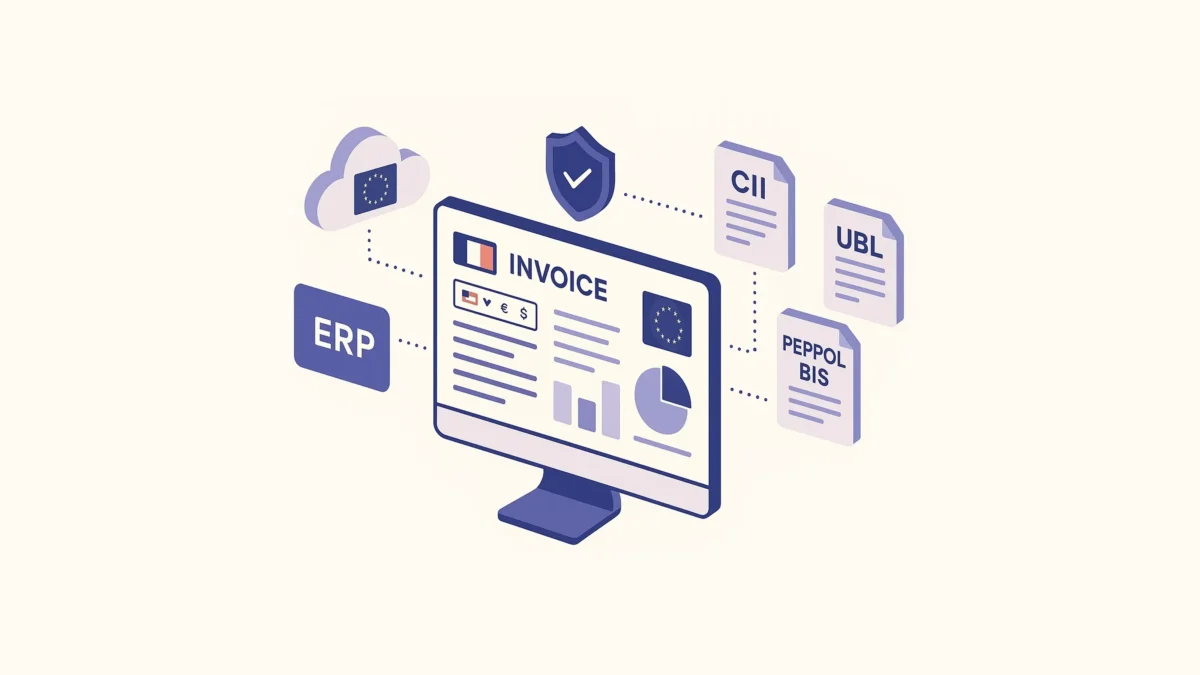
To stay compliant with EU e-invoicing laws, it’s crucial to adopt secure and well-integrated software. According to recent findings, 41% of SMEs still face technical challenges such as lack of ERP integration or format incompatibility.
When choosing your solution, look for:
- Support for formats like CII, UBL, and PEPPOL BIS.
- Local compliance (e.g. SAF-T compatibility).
- Multi-language and multi-currency features.
- Tools that centralize compliance across regions.
For full implementation guidance, see The Ultimate Beginner’s Guide to VAT Compliance.
Implementation Tips
- Conduct a gap analysis of your existing ERP or accounting system.
- Integrate with an e-invoicing module that supports SAF-T real-time reporting.
- Run tests with a small batch of invoices before scaling to your entire billing flow.
Step 4: Map Out Mandatory Data Fields
EU regulations often require detailed invoice fields – from supplier info to tax codes and digital signatures.
- Italy’s FatturaPA format mandates the CodiceDestinatario (recipient code) for each invoice.
- Hungary’s real-time system requires an authentication token and hashed invoice data to ensure submission integrity.
- Some countries also use UUIDs to link invoices with shipping or procurement documents.
To stay compliant across regions, your system must support field validation and local formats.
For detailed guidance, see E-Invoicing: What You Need to Know.
Tracking Changes
Keep track of new fields and schema updates through official tax portals or trusted advisories. EU countries often revise invoicing rules with little notice, so it’s crucial to review your templates regularly. Even minor changes – like a new VAT code or required reference field – can lead to rejections if missed.
Step 5: Ensure Cross-Border Consistency in Electronic Invoicing Compliance
When you manage invoices across multiple EU countries, consistency is key. According to the European Commission’s Staff Working Document SWD(2024) 39, approximately 36 billion invoices are issued annually in the EU, with roughly half involving B2B or B2G transactions.
- Use a central records system, ideally cloud-based, that can manage region-specific archiving deadlines.
- Develop standardized templates for each target country.
- Heed local eIDAS requirements for electronic signatures (or consult multiple sources – such as official tax authority portals and several well-known advisories – to ensure consistent guidance).
Maintaining consistency across jurisdictions not only reduces compliance risk but also improves audit readiness and operational efficiency.
Common Pitfalls
- Overlooking local archiving rules can lead to penalties.
- Failing to apply the correct fiscal code might cause invoice rejections.
- Manually combining separate systems leads to errors.
Step 6: Address Security and Data Protection
Electronic invoicing compliance also involves safeguarding invoice data. As most e-invoicing platforms rely on cloud infrastructure, it’s essential to follow EU GDPR Regulation (Regulation (EU) 2016/679) when processing or storing any personal and financial information. In addition, real-time reporting via protocols like SAF-T demands robust encryption during data transmission to guarantee integrity and confidentiality.
- Implement role-based access controls (RBAC) to restrict access to sensitive invoice and transaction data.
- Ensure your software provider is certified under ISO/IEC 27001 or an equivalent standard for information security management.
- Maintain a comprehensive audit trail that logs user access, data changes, and all invoice dispatch events.
Strong security measures not only prevent compliance breaches but also build trust with tax authorities and business partners.
Key E-Invoicing Security Measures
E-invoicing security involves encryption of transmitted data, strict user authentication (multi-factor login), and routine audits of access logs. Together, these help keep invoices safe from unauthorized viewing or manipulation.
Step 7: Monitor Ongoing Changes and Train Your Team
EU electronic invoicing laws continue to evolve. For example, Italy extended its e‑invoicing mandate to include micro‑enterprises as of 1 January 2024, removing previous turnover exemptions.
- Schedule quarterly or biannual training sessions so your team stays aligned with the latest technical and regulatory updates.
- Subscribe to official newsletters from tax authorities in each operating country – these often include schema changes, new mandatory fields, and filing deadlines.
- Track your error rate in real‑time reporting systems and promptly address recurring issues to mitigate compliance risk.
Keeping staff well-informed and systems updated reduces errors, streamlines processing, and ensures timely compliance across jurisdictions.
Conclusion
The shift to e-invoicing is reshaping how businesses across the EU manage VAT compliance. As more countries adopt real-time reporting and stricter data requirements, staying ahead means more than just meeting deadlines – it means building resilient, future-proof systems. By embracing digital invoicing, standardizing processes across borders, and training your teams to keep up with evolving mandates, your organization can reduce risk, improve accuracy, and strengthen operational control.
Frequently asked questions
It means meeting all legal requirements for issuing and sending invoices electronically. This includes using the correct data format, following archiving rules, and fulfilling real-time reporting obligations set by each EU country.
Yes. Penalties vary across the EU and may include fines or rejection of invoices. For example, in Hungary, failure to report invoices in real time can result in significant financial penalties.
By instantly transmitting invoice data to tax authorities, real-time reporting reduces the chance of manipulation or delays. This helps detect irregularities early and is estimated to prevent up to €11 billion in VAT fraud annually.
Not exactly. While the EU promotes standardization, each country has its own deadlines, technical formats, and archiving requirements. It’s important to stay updated on local changes, especially for SAF-T and mandatory data fields.
Cloud-based platforms that automate invoice formatting, validation, and SAF-T reporting are ideal. Some solutions centralize regional rules and e-signature requirements to simplify operations across borders. These tools help businesses stay compliant by standardizing processes, reducing manual errors, and ensuring secure data exchange in line with EU regulations.