What You Will Learn
In the next few minutes you will:
-
See why airtight VAT compliance matters more than ever.
-
Discover seven standout consulting firms, from specialist boutiques to global giants.
-
Learn the key services a VAT adviser should deliver: registration, filing, reporting, and error prevention.
-
Spot the frequent mistakes businesses make before they call in help - and how the right consultant fixes them.
Each section builds on the last so the narrative never drops the thread.
What Are Standard VAT Procedures?
Standard VAT procedures cover five linked steps: registering in each jurisdiction once thresholds or obligations arise, issuing compliant invoices, recording input and output tax in real time, filing periodic returns through mandated digital channels, and archiving evidence for audits. Done consistently, these steps keep businesses legally compliant and cash-flow efficient.
Why “Standard” VAT Compliance Is Critical
Even routine VAT steps - registering, issuing invoices, submitting returns - now sit under brighter regulatory spotlights. VAT is a prime revenue pillar for treasuries, with over 170 countries operating a VAT now. Authorities tighten controls because leakage is huge: the EU compliance gap alone hit €128 billion in 2023.
Governments also digitize enforcement. The UK’s Making Tax Digital (MTD) drive pulled in £185 million to £195 million of extra VAT in 2019–2020 and cut mistakes for 67 % of early adopters. Firms that underestimated the shift spent weeks retro-fitting data.
An experienced consultant shields you from penalties, frees staff time, and positions you for cross-border growth. For a more detailed look at the downsides of non-compliance, see Why should you take VAT compliance seriously? Possible consequences of VAT breaches.
How to Choose a VAT Consultant
Your shortlist should not start with brand logos but with fit. Ask yourself what pain you need to solve first.
-
Registration in multiple jurisdictions
-
Monthly/quarterly filing and corrections
-
Digital reporting (SAF-T, e-invoicing, MTD)
-
Advisory on supply chain or marketplace rules
-
Audit defense
Use these six filters to rank candidates:
-
Breadth of jurisdictional cover
-
Bench depth: certified tax attorneys or chartered accountants on staff
-
Technology stack: secure data exchange, real-time dashboards (never confuse with “automation sales pitches”)
-
Regulatory relationships: do they liaise directly with tax offices?
-
Pricing clarity: flat fees, not percentage of turnover
-
Client stories in your sector
A mid-sized SaaS vendor, for example, picked a boutique over a Big Four firm because the smaller shop had reusable product classification templates. One quarter later, the client slashed reconciliation time from ten to four hours per return.
Reading that, you may wonder which names keep ticking these boxes month after month. Here they are.
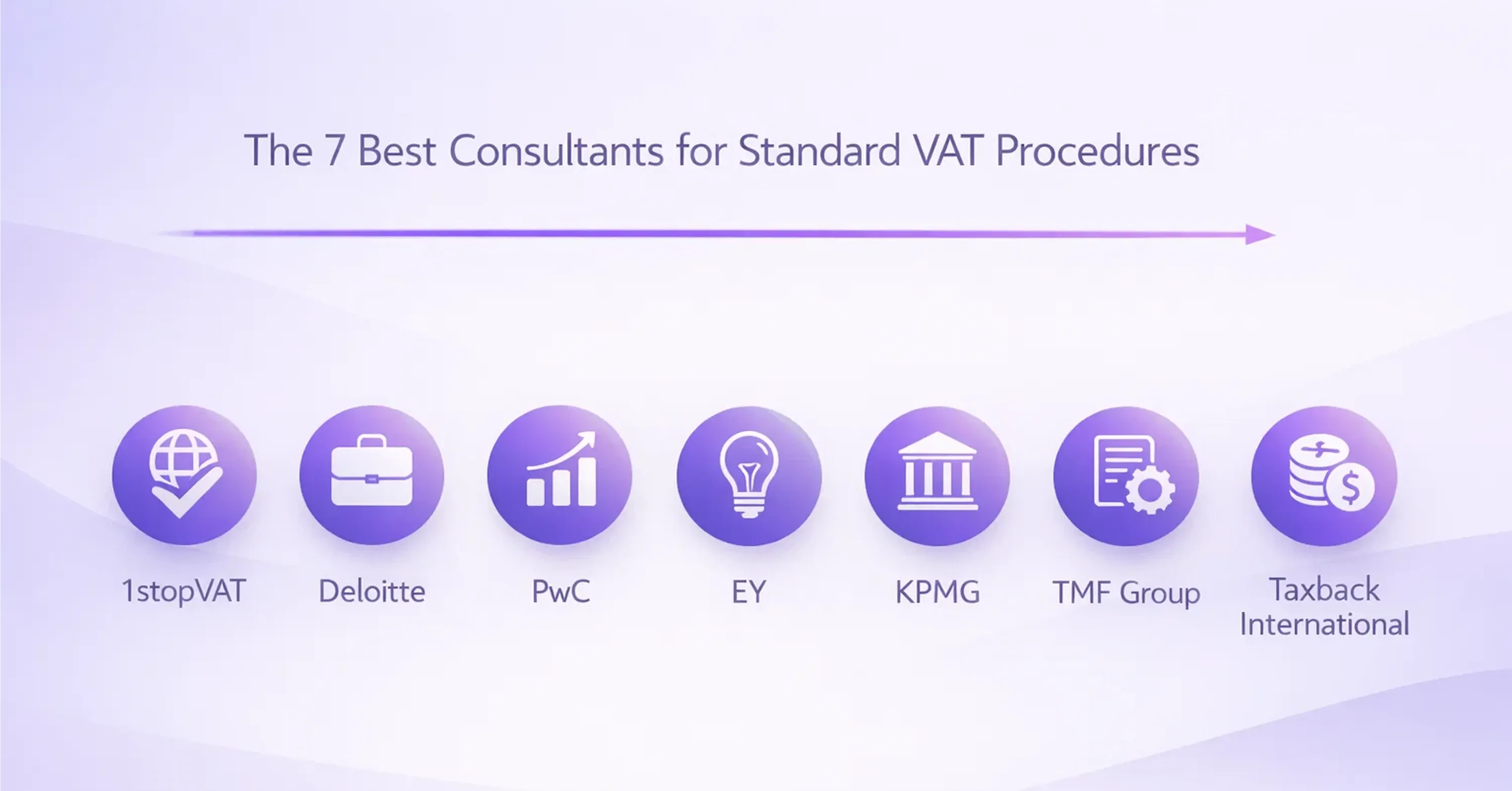
The 7 Best Consultants for Standard VAT Procedures

Below is a balanced list - specialist market leaders plus diversified global advisers - ranked for transparency, service scope, and client feedback.
1. 1stopVAT: The Global One-Stop Leader
1stopVAT acts as a single point of contact for registration, filing, and consulting in 100+ countries. Its 40-plus certified tax specialists pair automated data tools with hands-on reviews, so errors are caught long before authorities spot them. Tech start-ups love the subscription-style bundles; retailers value the multilingual helpdesk when customs officers call. Two online marketplaces reported that switching to 1stopVAT cut their late-filing incidents to zero in six months.
2. Deloitte Indirect Tax
-
Worldwide coverage backed by local offices
-
Deep industry playbooks (pharma, automotive, digital services)
-
Strong audit defense track record
A mid-caption manufacturer leveraged Deloitte’s ERP connectors to transition 16 subsidiaries into real-time invoice reporting in Spain without downtime.
3. PwC VAT & Customs
-
Custom diagnostic tools that benchmark error risk
-
Embedded legal teams for dispute resolution
-
Client portal with granular task tracking
A food exporter halved internal email threads by routing all HMRC queries through PwC’s portal.
4. EY Global Indirect Tax
-
End-to-end compliance outsourcing or co-sourcing
-
Scenario modelling for supply-chain tweaks
-
Specialized e-commerce pods
When Germany rolled out monthly digital SAF-T, an online fashion retailer leaned on EY to ensure their Shopify feed matched ledger data line by line.
5. KPMG Indirect Tax Network
-
140 jurisdictions covered
-
Data analytics identifying anomalies before audits
-
Training modules for in-house teams
A telecom provider’s finance staff completed KPMG’s two-day VAT academy and increased first-time-right return rate from 85 % to 98 %.
6. TMF Group VAT Compliance
-
Focus on mid-market multinational entities
-
Local compliance officers in 80+ countries
-
Payroll and corporate secretarial services bundled for synergy
A logistics firm new to Asia relied on TMF Group to register for GST in Singapore in under four weeks, meeting a tight launch date.
7. Taxback International
-
Platform capturing transactional data at source
-
Strong reclaim services for travel and intercompany charges
-
Flexible engagement: full outsourcing or toolkit plus advisory
A biotech company recovered €1.2 million of overpaid VAT across 11 EU states by following Taxback International’s reclaim roadmap.
These seven firms dominate client shortlists because they keep proactive contact with tax authorities and iterate processes after each legislative tweak. The order above is not absolute; your ideal partner depends on geography, budget, and internal capacity.
To see how these advisers rank in the broader consulting landscape - and what sets apart the industry leaders - read Top VAT consultants 2025.
VAT Registration: First Gate, First Risk
Many businesses stumble at the starting line. VAT registration thresholds differ: £90,000 in the UK, €10,000 distance-sales threshold across the EU, zero in Australia for foreign digital suppliers.
-
Consultants confirm whether you must register and where.
-
They assemble required documents: articles of association, proof of business activity, bank details.
-
They interface with local tax portals, securing IDs and login credentials.
A US SaaS vendor assumed it could wait until annual revenues topped €35,000 before registering in France. A consultant flagged the digital-services rule: zero threshold for non-EU providers. Registration was filed within days, averting fines calculated on the previous year’s sales.
If you want a clear walkthrough of the most common registration procedures (with tips to pass compliance on the first try), check out How to Register for VAT: A Complete Guide.
When this gate is cleared, the marathon has only begun: filings arrive every month or quarter.
Filing and Reporting: Staying Current, Staying Digital
After registration comes relentless cadence. Authorities use near-real-time data to match invoices, so late or inconsistent filings stick out instantly. In the UK, 74% of 2019-mandated businesses were already using fully functional MTD software; the laggards see more queries.
Good consultants do the heavy lifting:
-
Generate returns directly from your ERP exports
-
Run variance analysis on taxable bases
-
Submit via digital links, preserving the “digital journey” HMRC requires
-
Reconcile payments and refunds, booking journals in your ledger
-
Maintain statutory archives for the required six to ten years
Learn how to use digital reporting to your advantage - and avoid the red flags that prompt audits - in the VAT Filing & Returns: A Complete Guide for Businesses.
MTD saved time for many companies, and 66% used that freed time to boost productivity. A consultant ensures you are in that winning cohort, not among the 26 % still wrangling bridging spreadsheets.
Common VAT Mistakes - and How Consultants Prevent Them
Even experienced finance teams slip up. Consultants earn their keep by blocking these potholes.
-
Misreading place-of-supply rules: digital downloads taxed where the customer sits, not the seller.
-
Input tax blocked on employee perks or passenger vehicles.
-
Neglecting currency conversion rules, leading to underdeclared output VAT.
-
Forgetting local invoice formatting: sequential numbers, language, and QR codes.
-
Missing deadlines during staff holiday seasons.
A Dutch agri-tech exporter once listed “reverse charge applies” on invoices to Swiss customers. A consultant spotted Switzerland is outside the EU VAT system, so local VAT was actually due. Amended invoices and a voluntary disclosure saved the company a 15 % penalty.
To learn which errors trip up even experienced firms (and how to fix them before the tax office calls), see Reclaiming VAT: A Simple Guide for Businesses.
When the right adviser builds checks around such pitfalls, compliance becomes routine rather than reactive firefighting.
Conclusion
Staying compliant with VAT is not glamorous work, yet it is the work that keeps commerce running. By understanding registration duties, filing rhythms, and typical errors, you can judge consultants on substance rather than slogans. The seven advisers profiled here, led by 1stopVAT, prove their value daily by turning shifting regulations into predictable processes. Choose the partner whose strengths match your footprint, and VAT will shift from looming risk to managed routine.