

Summary
Summary
Proper VAT ID validation is crucial for establishing a sound VAT compliance system. It helps distinguish between B2C and B2B transactions, preventing challenges for both vendors and customers.
Background
The proper VAT ID validation process is an essential part of establishing a sound VAT compliance system. A reliable VAT ID validation system is necessary for every business that has taxable customers. The absence of processes to distinguish between B2C and B2B transactions could lead to significant challenges for the vendor or customer if the buyer is a VAT-registered entity.
The importance of the VAT ID validation process begins at the very start, before the issuance of invoices or receipts, and continues with the subsequent accounting procedures. The first step should be the proper identification of the vendor or customer. Only later should the invoice be issued or received.
In B2B transactions, deficiencies in sound VAT validation could lead to incorrect invoicing, wrong calculations, erroneous returns, loss of the right for tax deduction, and the necessity for issuing credit notes.
The significance of the proper VAT validation tools has grown exponentially with the rise of the e-commerce and platform economy. E-commerce marketplace operators and cross-border providers of digital services are at the forefront of entities recognizing the importance of an effective VAT ID verification tool.
Tax ID Validation and EU E-Commerce
The adoption of the EU eCommerce package further increased the need for internal development or third-party integrations, given their accountability for a broad spectrum of transactions they facilitate. The introduction of the tax concept – Deemed Supplier, which incorporated the general provision for VAT accountability for the underlying transactions to the marketplace operator, placed an additional burden on marketplace operators to have a fast, reliable, and audited VAT ID Lookup solution.
In cases where the e-commerce marketplace is a deemed supplier, the VAT ID validator will verify the VAT status of the underlying supplier (for B2B transactions) and, when necessary, also confirm the status of the customer, which is the second transaction between the marketplace and the customer.
For specific types of transactions, such as imports of low-value goods in the EU, no matter where the underlying supplier is established, the marketplace is accountable for VAT when the customer is an EU resident.
There are primarily two routes that e-commerce marketplaces or cross-border providers of digital services can take when it comes to VAT validation tools. They can choose to build an internal solution, integrate with one or more third-party service providers, or do both.
The European Commission developed a VAT on Information Exchange System(VIES), which is a general database of VAT numbers issued and validated by Member States. The VIES system is updated occasionally, but it lacks efficiency and accuracy due to the absence of real-time updates between the central database and the VAT databases of Member States.
VAT numbers within VIES are a collection of VAT numbers that EU persons have validated, primarily due to their participation in intra-EU transactions.
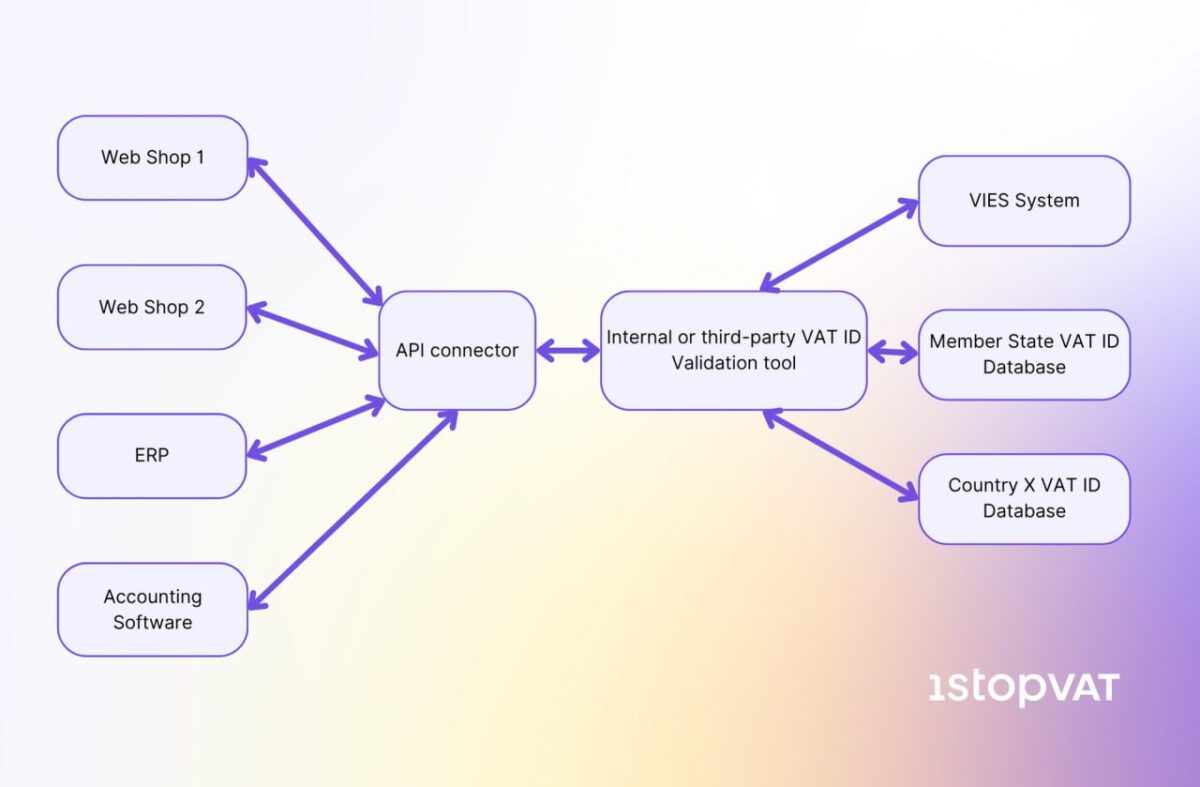
To explain in more practical terms the relevance of the proper VAT ID validation tool, where it is used, for what types of transactions, and for what kinds of supplies, you can see in the example picture below:
VAT ID Validation Tool for Online Suppliers
Takeaway
For cross-border providers of digital products and services, accurate and efficient VAT ID validation is of paramount importance when it comes to VAT compliance. The VAT ID verification tool will significantly reduce the percentage of errors in tax status and vendor or customer identification.
Aleksandar Delic
The erroneous verification of the tax ID of the client or vendor could lead to incorrect invoicing, deficient returns, losing the right to add input tax credits, and reducing tax payable to tax authorities. From the business side, it could lead to potential issues with customers who cannot claim input VAT or to incorrect calculations of the invoice total, to name a few.
Indirect Tax Manager – E-Commerce
VAT ID validation ensures proper VAT compliance by distinguishing between B2B and B2C transactions, preventing issues like incorrect invoicing, wrong tax calculations, and loss of tax deductions.
Poor VAT ID validation can lead to invoicing errors, incorrect tax calculations, erroneous returns, and loss of tax deduction rights. It can also result in the need for credit notes and further complications in accounting procedures.
With the rise of e-commerce and platform operators, VAT ID validation has become critical because it involves verifying the VAT status of both suppliers and customers, especially for cross-border transactions and marketplaces acting as deemed suppliers.
The VAT Information Exchange System (VIES) is a general database of VAT numbers issued and validated by EU Member States. While it provides a basic validation, it lacks real-time updates and efficiency, making it less reliable for fast-paced transactions.
E-commerce businesses can either build an internal VAT validation system or integrate third-party solutions. The European Commission’s VIES system can be a starting point, but additional tools may be necessary for more accurate and real-time validation.
For cross-border digital services, VAT ID validation helps marketplace operators confirm the VAT status of suppliers and customers, ensuring compliance with local VAT laws, especially in regions like the EU, where marketplaces are deemed suppliers for certain transactions.
Register for a FREE consultation
We offer a FREE consultation to better understand your needs. This could result in a simple solution to your taxes issues or lead to a more collaborative working relationship. Let’s find out what’s the best solution for you!
Book a Free consultationWhat are the consequences of not being compliant?
How to ensure compliance?